Serving Inglewood, CA & nearby
(424) 237-3669
Inglewood, CA

What That Noise Is Actually Telling You

A guide for Inglewood homeowners on what grinding, popping, and slapping garage door noises actually mean, based on the area's 1960s-70s housing stock.

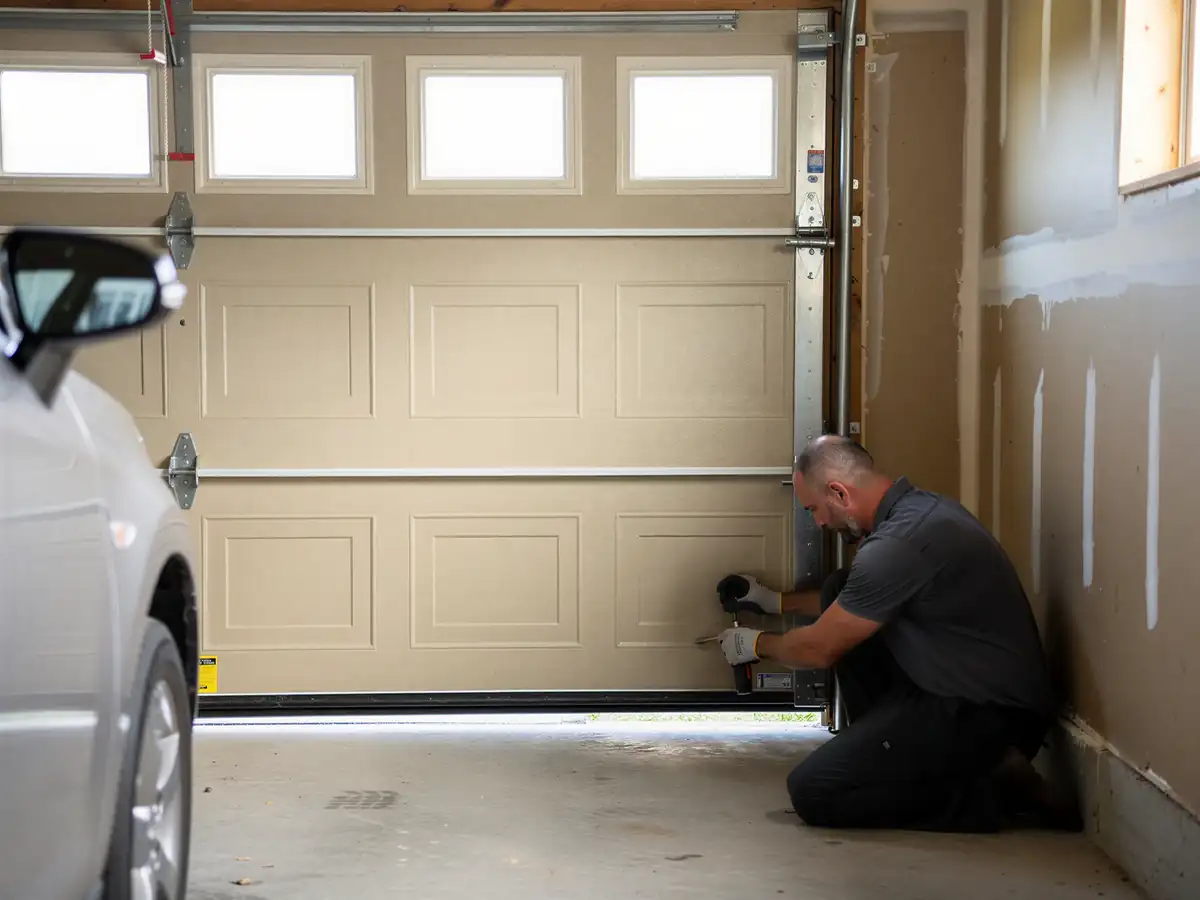
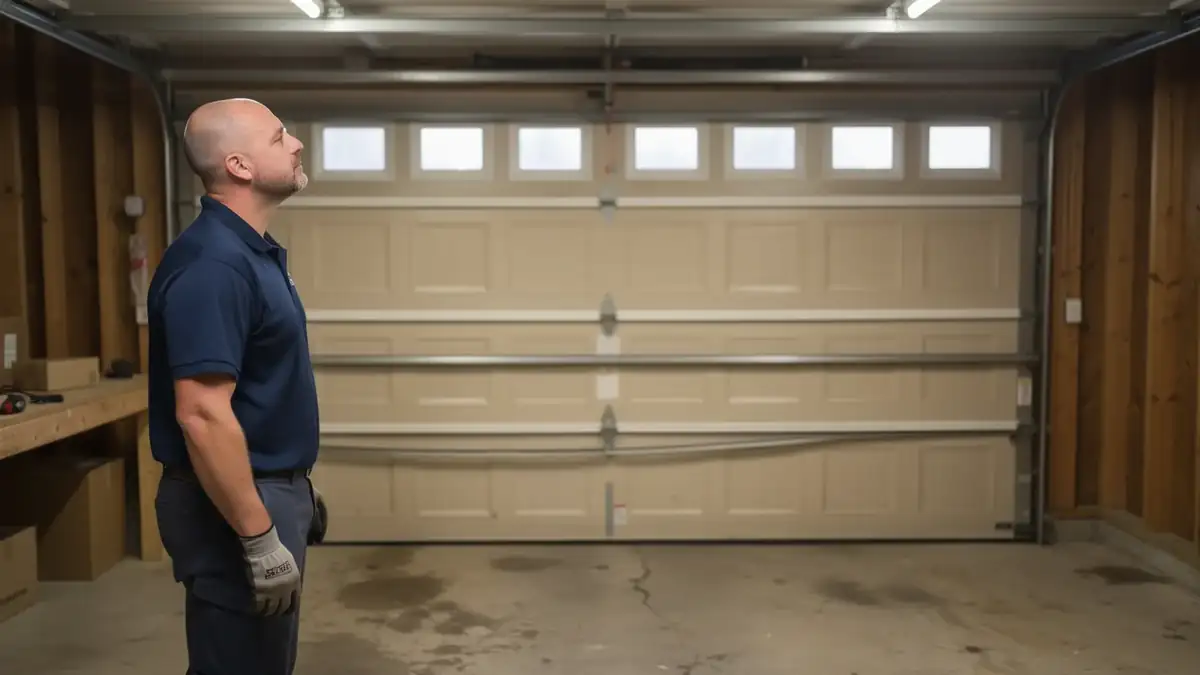
A technician looks up at a damaged tan garage door inside a garage.

The Problem

Most houses around Inglewood went up between 1943 and 2012, but the median build year lands at 1961, and a lot of the 62 named neighborhoods in this stretch of the county are still full of that 1960s-70s stock. That matters for noise because those doors and openers have been replaced piecemeal over sixty-some years - a new opener bolted to old track, a new spring on an original header bracket, a torsion tube that's outlived three motors. Each mismatch makes its own sound. A door that slaps on the way down usually means the rollers have worn oval in houses from this era, where galvanized steel rollers were standard and nobody's swapped them. A rhythmic thump once per rotation often means a flat spot on a roller or a bent track hanger, both common on original hardware from a 1961-built garage that's never been touched. Grinding on the way up, especially on a double door, points to a torsion spring that's lost lubrication - the kind of spring that's original to houses built before the mid-70s retrofit wave. None of these noises are random. They're the hardware telling you which decade it's from.

Leaving It Alone

The mild temperate climate here doesn't put the stress on a door that you'd get somewhere with hard freezes or heavy humidity swings, so a noisy door in Inglewood can run for months without snapping outright - that's the trap. A loose chain slapping the rail will wear the sprocket teeth down to nothing if you let it ride. A squealing hinge on a 1960s-era panel will eventually crack the panel at the hinge screw holes, because the metal's already fatigued from decades of the same flex. The lack of weather extremes means these doors don't force a repair the way cold-climate doors do, so people here tend to adjust to the noise instead of fixing it. That's a mistake specific to this climate band - a door that would've failed obviously in a harsher climate just keeps groaning along here until a cable finally lets go or a spring snaps under tension it's been losing evenly for years.

Where People Go Wrong

The most common mistake we see on original or near-original hardware from the 1960s-70s stock is spraying WD-40 on a torsion spring and calling it fixed. WD-40 is a degreaser, not a lubricant, and it strips what's left of the factory coating off springs that are already fifty-plus years past their install date. The second mistake is tightening a loose track bracket without checking whether the wall anchor it's screwed into is still sound - in houses built mid-century, those anchors were often set into studs that have since dried and shrunk, so the bracket can look tight while the wall behind it has given way. The third mistake, and we won't sugarcoat this one: some of these doors are past the point where quieting them down is worth the labor. A door built on 1960s track with a panel that's already cracked at two hinge points isn't a lubrication job, it's a replacement conversation, and we'll tell you that straight rather than keep charging you for service calls that just buy another few months.

What Local Conditions Do

With median household income at $93,882 across the service area and 244,769 owner-occupied houses out of 749,083 households, a lot of these garages are original purchases on original doors - owners who bought the house, not the door, and never thought about the hardware until it started talking. The mild temperate climate means you're not dealing with ice-stiffened springs or humidity-swollen panels, so when something's making noise here, it's almost always mechanical wear rather than weather damage. That's actually useful: it narrows the diagnosis. If your door is noisy in Inglewood, the climate isn't the cause - the age and mismatch of the parts is. That's a different conversation than it would be somewhere with real seasonal extremes, and it's why a fix here is usually about matching hardware generations, not weatherproofing.


How it works

From “it’s stuck” to “it’s fixed”

A person in a denim shirt stands in a driveway, looking at a phone.

Tell us what’s wrong

Describe the symptom - won’t open, loud bang, opener runs but the door won’t move.

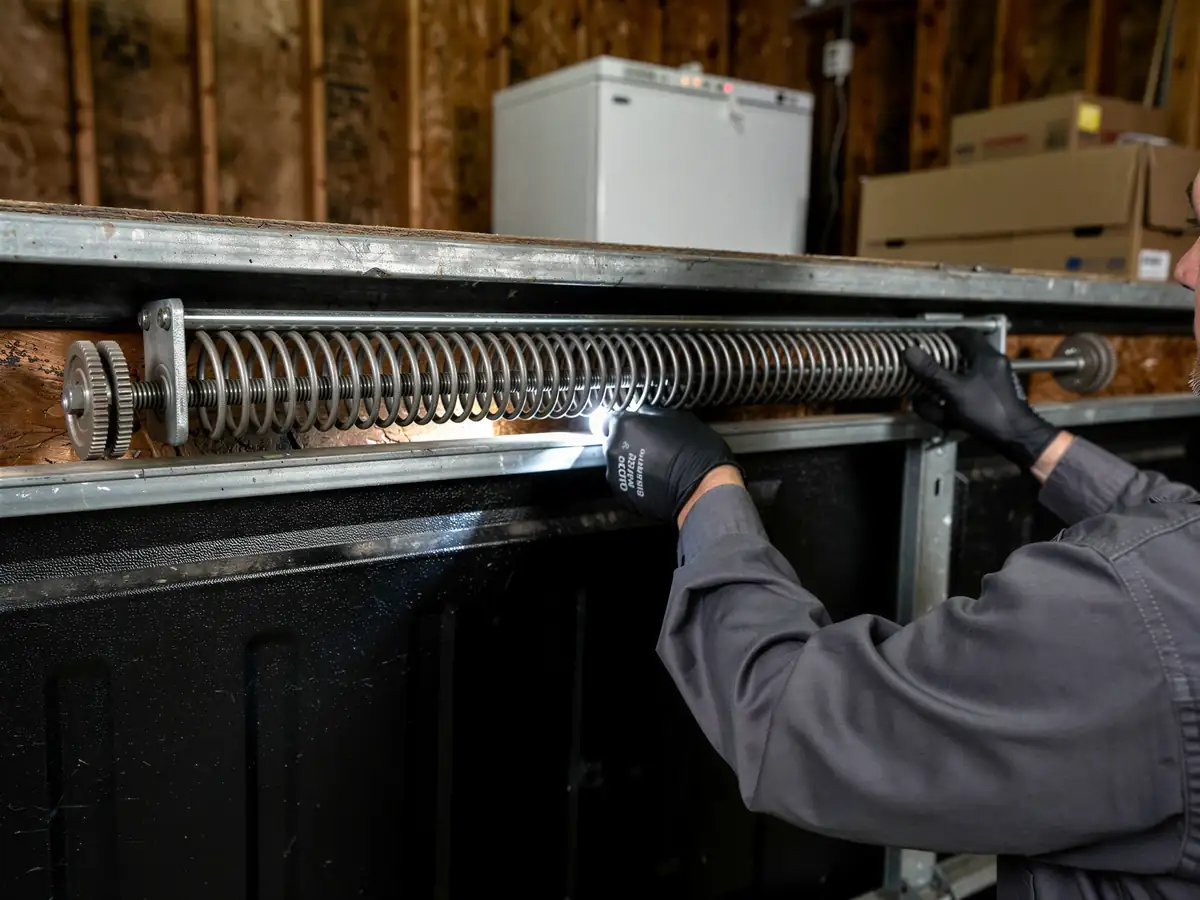
A technician shines a flashlight on a garage door torsion spring.

On-site diagnosis

A technician tests the door under power and by hand and finds what actually failed.

A technician in a blue uniform talks to a woman in front of a house.

Clear, up-front plan

You get the fix that’s needed and what drives the cost - before any work starts.

A technician in a gray uniform is pressing a button on a beige garage door.

Repaired & tested

The repair is done, the door is set true and tested, and the work area left clean.

Next step

Not sure which repair your door needs in Inglewood, CA? Describe what it’s doing - every job starts with a diagnosis.

How we work

What to expect

A straight, honest approach on every Inglewood job.

Diagnosis first

Every visit starts by finding what actually failed - not a pre-written parts list.

The right part for the door

Springs and openers matched to the door’s weight and age, so the fix holds up.

Straight answers

When a repair makes more sense than a replacement - or the reverse - you hear it plainly.

Clean, careful work

Tension released safely, hardware set true, the door tested under power before we leave.

What we do

Garage Door Services

Repair and installation work for Inglewood homes and businesses.

Questions

Frequently asked

Straight answers about garage door repair in Inglewood. Still unsure? Ask us directly.

My garage door makes a loud bang when it closes. Is that serious?

Usually yes. A single hard bang on closing, especially on older track common in this area's 1960s-70s housing stock, often means a cable has slipped off its drum or a spring has lost tension unevenly. Don't run the door again until it's looked at - a door that bangs shut under uneven spring tension can come down fast and hard.

Why does my door only squeal in certain weather?

Inglewood's mild temperate climate means you won't see the big seasonal noise swings that come with freeze-thaw cycles, but overnight condensation on bare metal track or hinges can still cause a temporary squeal that disappears once things dry out. If it's constant rather than occasional, that's wear, not weather.

Is a noisy door always a repair, or sometimes a replace?

Depends on what's making the noise and what it's attached to. A loose roller or dry hinge is a repair. A panel that's cracked at the hinge points or track that's bent along its length on an original 1960s-era door is usually a replacement call, and we'll tell you when we see that rather than keep patching it.

Ready to get your garage door sorted?

Tell us what it’s doing and where you are in Inglewood - we’ll take it from there.

Request a QuoteCall