The Problem
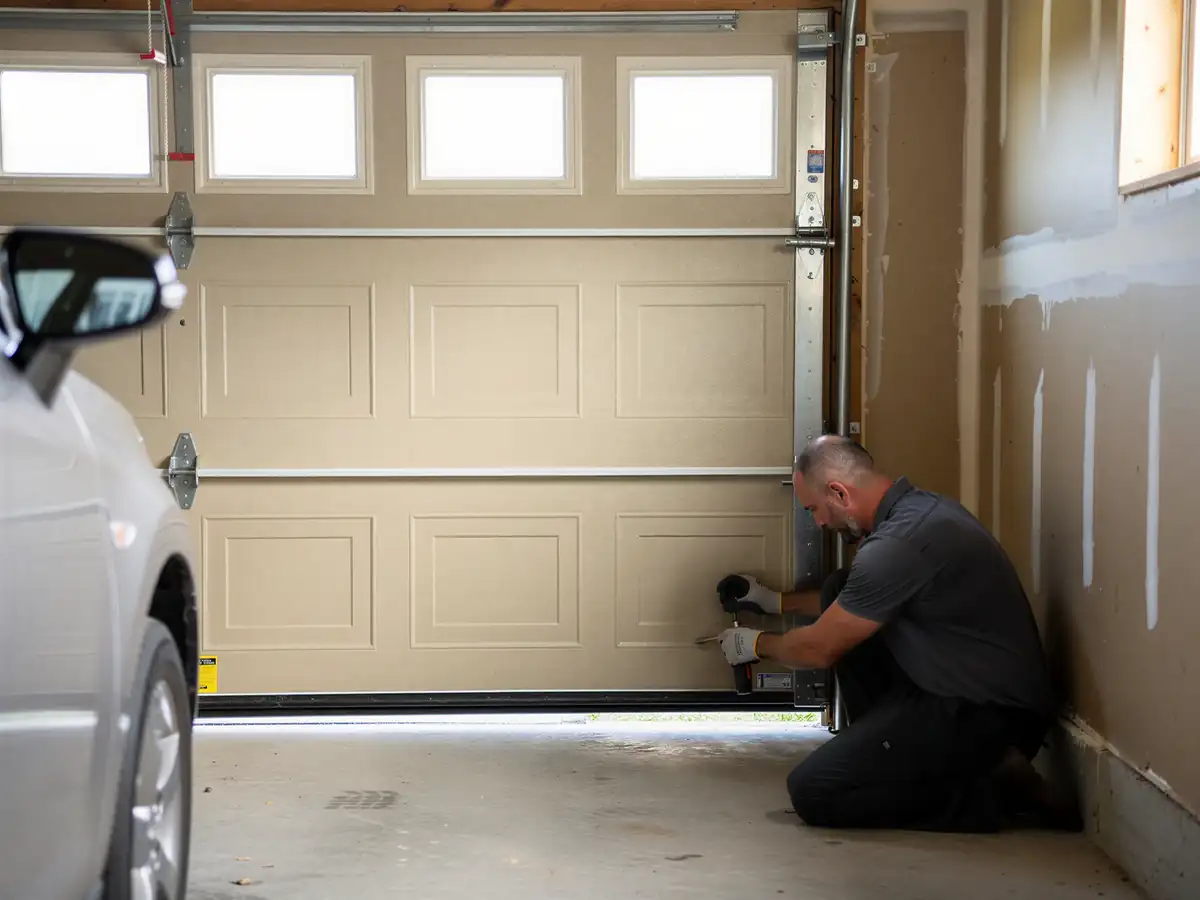
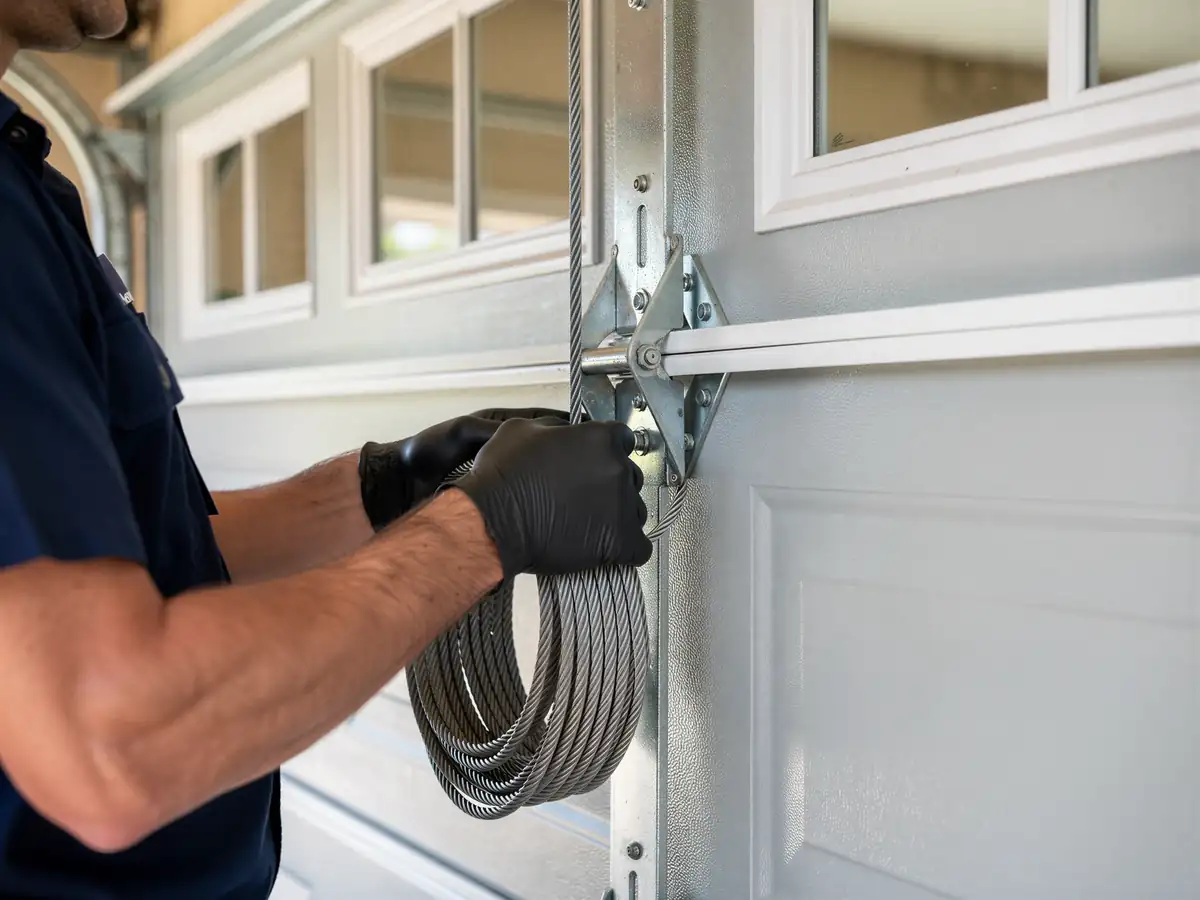
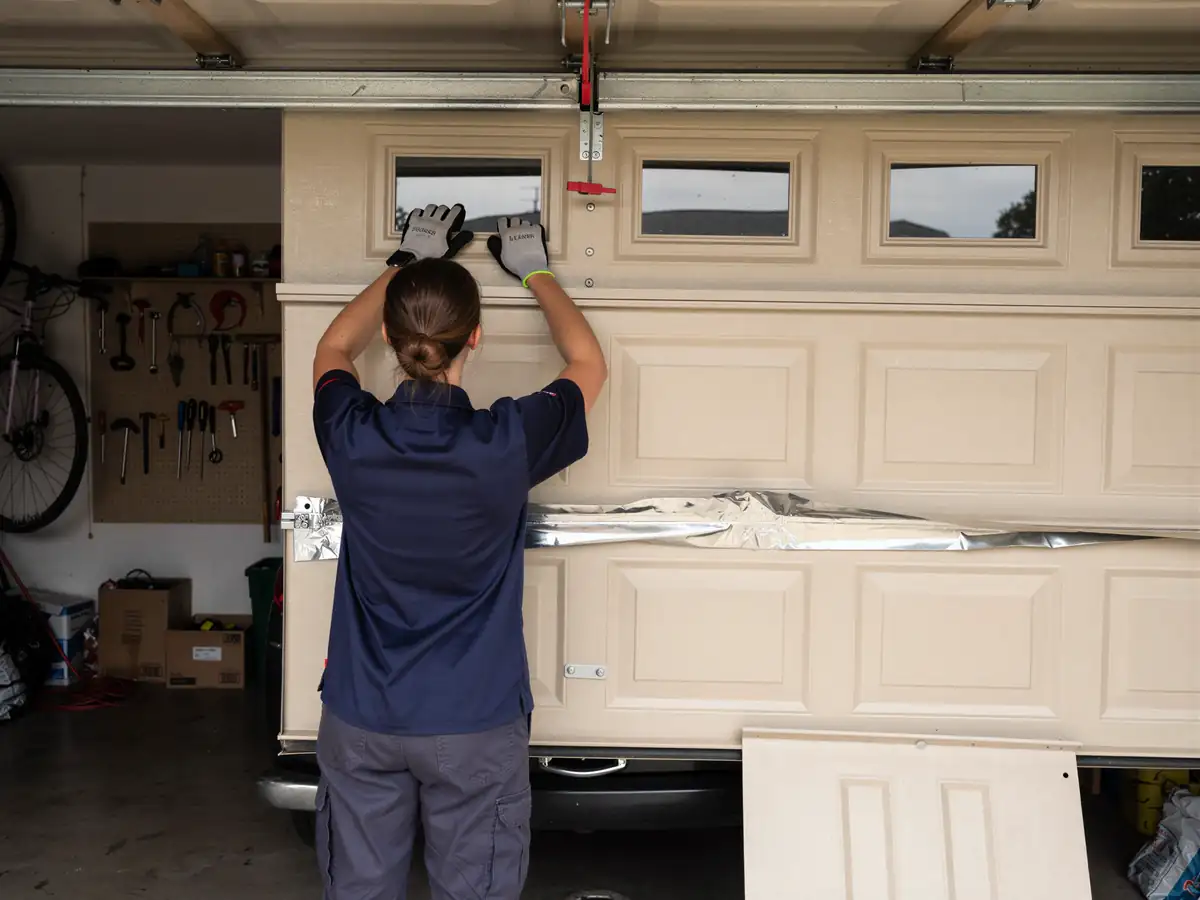
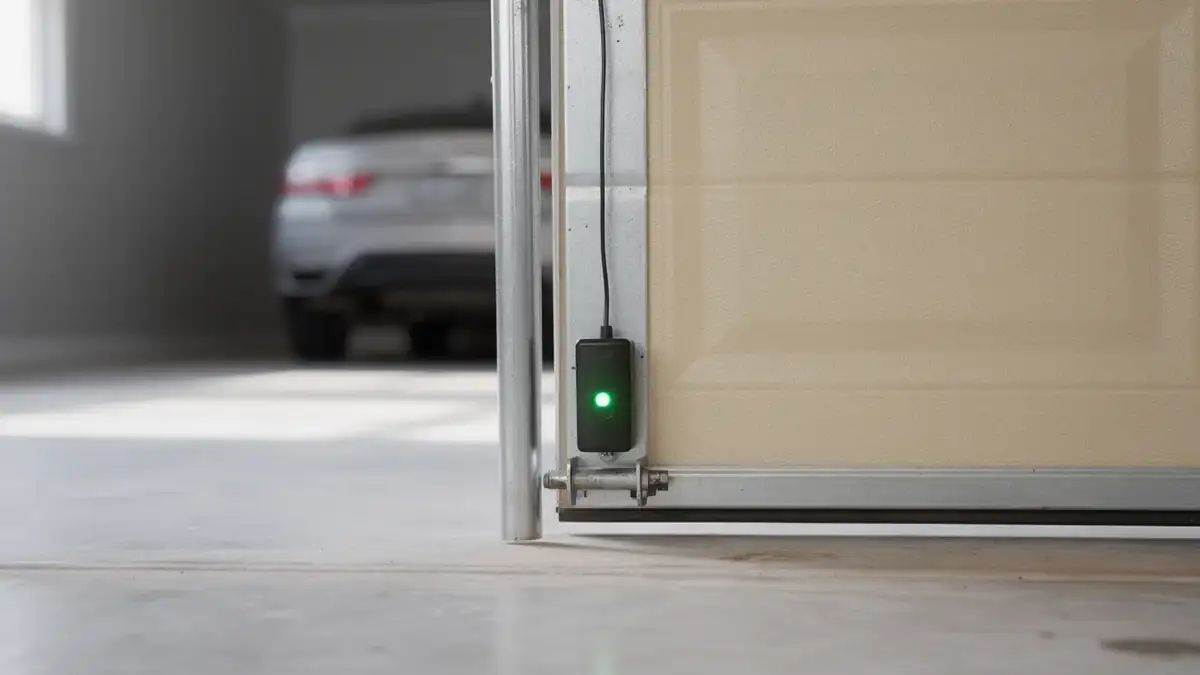
The two sensors near the bottom of your track - the photo-eyes that stop the door from closing on something - only work if they're staring at each other dead level. In most of Inglewood, the garages those sensors sit in went up between 1943 and 1961, with the median landing right at 1961. That's a lot of decades for a concrete slab to settle, and when the slab shifts even a quarter inch under one side of the track, the bracket holding the sensor shifts with it. You don't see it happen. You just notice the door starts reversing for no reason, or stops closing a few inches from the floor and won't finish.
Across the 62 neighborhoods that make up this part of the Los Angeles basin, the housing is overwhelmingly 1960s and 70s stock, which means the track those sensors bolt to is original steel in a lot of these garages, not the lighter aluminum rail you'd find on a door installed in the last ten years. Steel track flexes differently as a structure ages, and sensor brackets mounted on it take the movement. It's a slow drift, not a sudden failure, which is exactly why people miss it until the door stops working altogether.
Leaving It Alone
A sensor that's slightly out of alignment usually still works - for a while
The door closes fine nine times out of ten, then one day it doesn't, and you're standing in the driveway at 7 a.m. trying to figure out why the light on the sensor is blinking instead of solid. Left long enough, a drifting sensor will eventually stop registering at all, and the door will either refuse to close or, worse, close without checking for an obstruction the way it's supposed to.
That second case is the one that matters
The whole reason these sensors exist is to stop a door from coming down on a kid, a pet, or a car bumper. A sensor that's drifted out of alignment but still half-functioning can give you false confidence that the safety feature is active when it isn't reliably catching anything. We'd rather you call about a blinking light than wait until the door's not closing at all - by that point the bracket is usually bent enough that realignment alone won't hold.
Where People Go Wrong
The most common mistake is treating this like a lens-cleaning problem every time. Wiping dust off the sensor eye is worth doing, but on a lot of these older Inglewood garages the actual issue is the bracket itself - loose, bent, or mounted on track that's shifted since the house was built in the 1960s or 70s. Cleaning the lens won't fix a bracket that's two degrees off level.
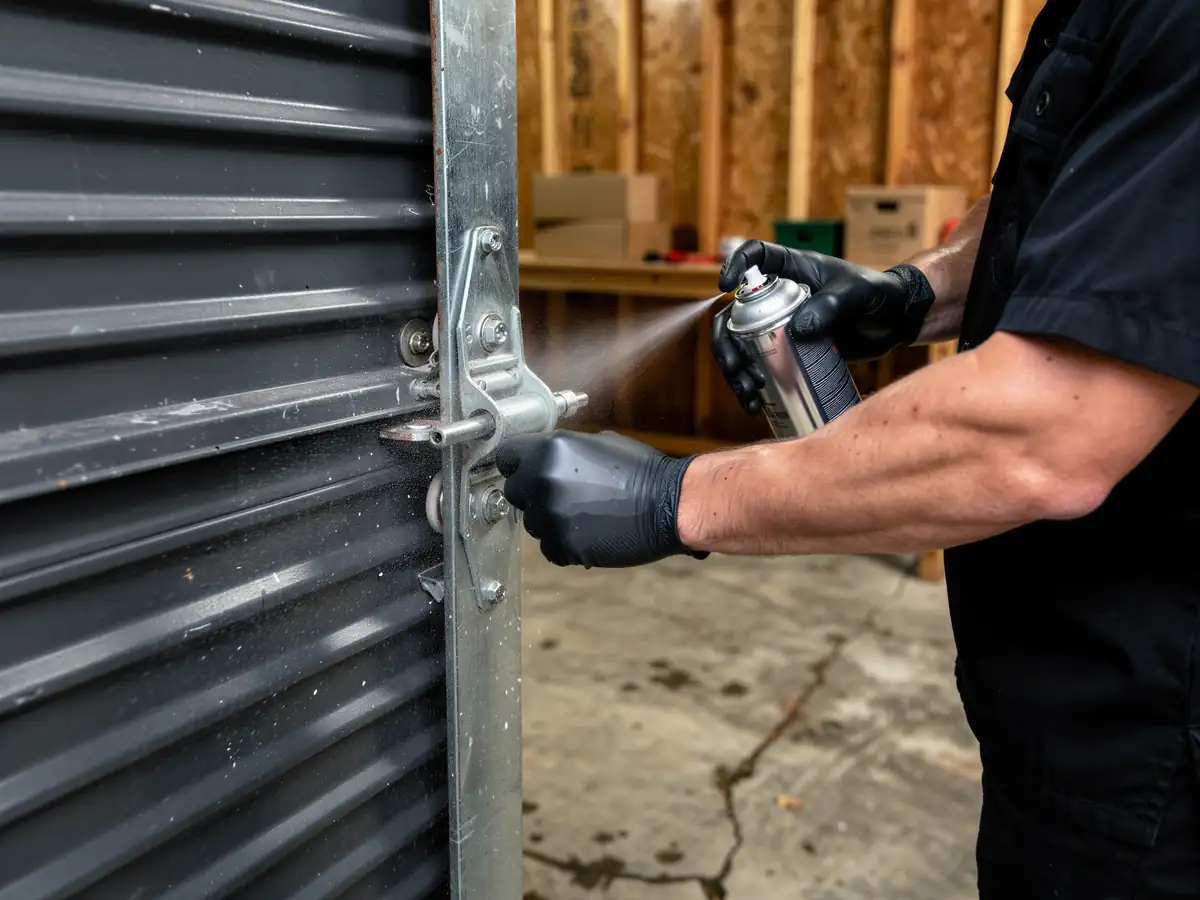
The second mistake is over-tightening. Original steel track from that era wasn't built with sensor brackets in mind - they got added on later, often as an aftermarket bracket clamped to the rail. Cranking that bolt down hard enough to stop it wiggling can actually bow the thin bracket arm, which throws the alignment worse than it was. We see this a lot on the older steel track in this area - someone's second or third attempt at tightening it themselves has bent the arm just enough that the two sensors are aimed at slightly different heights.
We don't try to save every bent bracket. If the arm's been bowed from repeated tightening or the mounting hole has worn oval, we replace the bracket rather than keep fighting it - it's a cheap part and it saves you from doing this again in six months.
What Local Conditions Do
Inglewood sits in a mild temperate band, so you're not dealing with the freeze-thaw cycle that heaves foundations and knocks sensors loose every winter the way it does in colder parts of the country. That's actually useful information: when a sensor drifts here, you can mostly rule out weather as the cause. The culprit is almost always the building itself - slab settlement that's been happening quietly since the house was built, somewhere in that 1943-to-1961 window for a lot of this area.
What the mild climate does instead is let things age slowly and predictably rather than fail suddenly. A bracket on a 1960s track doesn't snap from frost - it loosens a sixteenth of an inch at a time over years as the slab settles and the steel flexes with daily temperature swings. By the time you notice the sensor acting up, that slow drift has usually been underway for a long while. We check slab level at the base of the track as part of any sensor call in this area, because the sensor is rarely the actual root cause - it's just the part that tells you something underneath has moved.