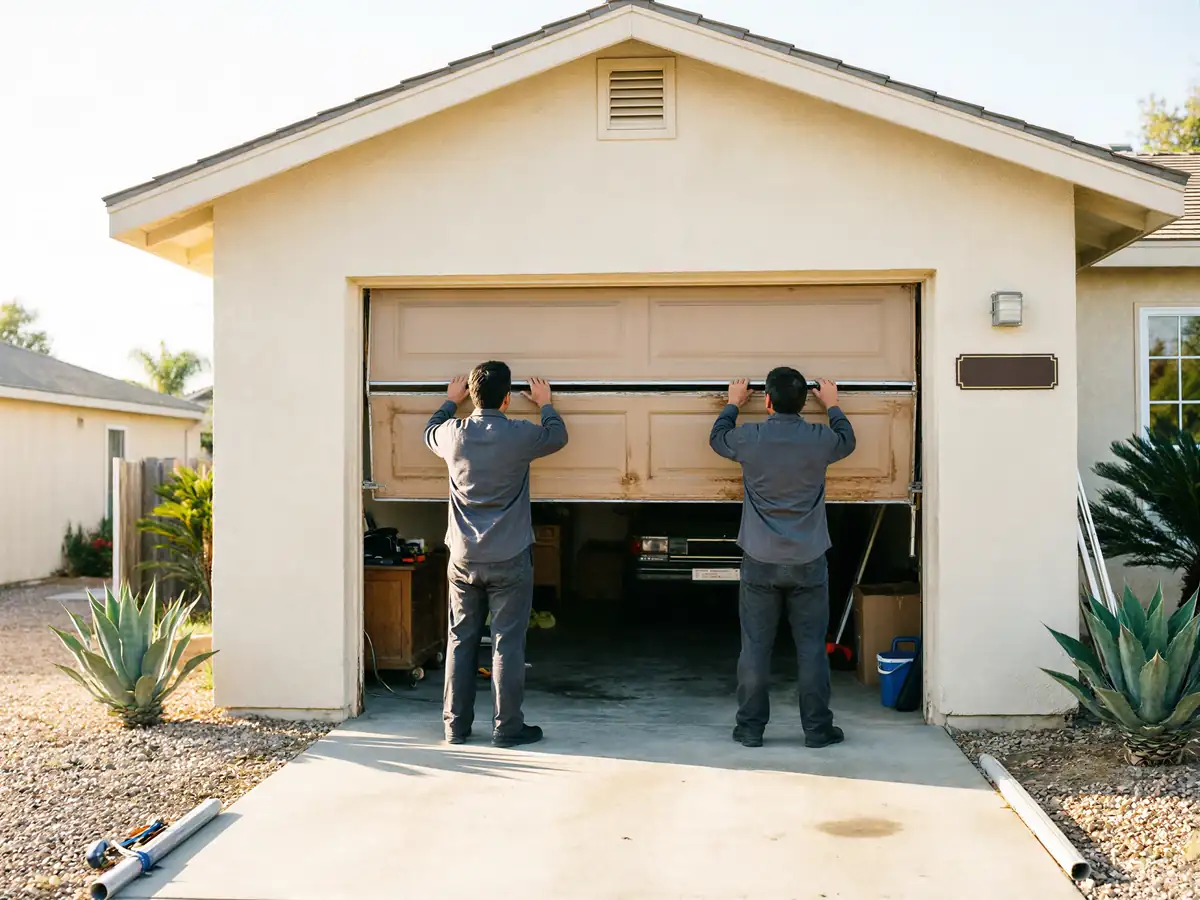
The DIY Question
Every homeowner who types "garage door installation inglewood ca" into a search bar has already looked at the big-box kits. A 16-foot double door, a jamb kit, an opener in a box, all priced to move. The question is whether that box fits your house.
Most houses in this part of the county went up between 1943 and 2012, with the median year sitting at 1961. That means a lot of original framing, original headers, and original rough openings that predate the stud spacing modern kits are built around. Across the 62 named communities that make up this stretch of LA County, the housing stock runs heavily 1960s and 70s construction, not the tract-built 2000s framing a Home Depot kit assumes.
A DIY install can go fine on a house built to current code. On a house with a 1961-era opening, the kit's track brackets often don't line up with the jamb, the header height is off by an inch or two, and the spring sizing charts on the box assume a door weight that doesn't match an older wood-panel door. You can force it to fit. It just won't run right once it's in.
We're not going to tell you it can't be done. We're telling you the odds of a clean, square install drop fast once the house is older than the kit.
Why This Fails Locally
The climate here is mild
Which is good news in one way: no freeze-thaw cycling tearing at concrete slabs or snow load bending track. But mild and dry for sixty-plus years does its own damage. Wood jambs built in the early 1960s have had decades to dry out, shrink slightly, and shift as the house settles. The opening is rarely perfectly square anymore, even if it looks fine from the driveway.
A generic installation kit is engineered for a square, modern opening
When you set it into a jamb that's out of square by even a half inch, the track doesn't sit parallel, the rollers ride the edge of the track instead of the center, and the door binds somewhere in its travel. On a new tract house this isn't an issue. On a house from the 1961 median build year that's common across this area, it's close to guaranteed.
The other local factor is header clearance
A lot of garages built in this era were framed for single-layer torsion hardware with less headroom than current code allows for. Installers who don't check that measurement first end up forcing a spring system that doesn't have the clearance it needs, which is how you get a door that slams the last six inches instead of settling.
How We Fix It
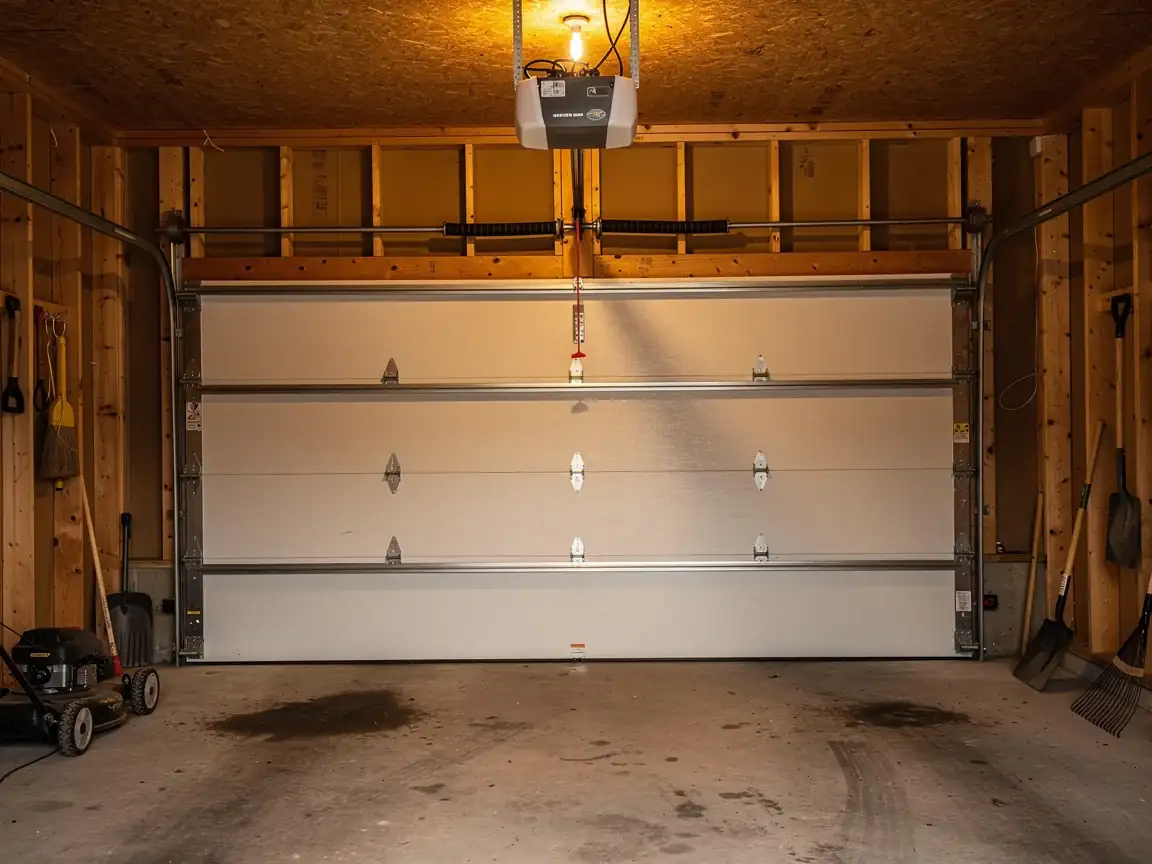
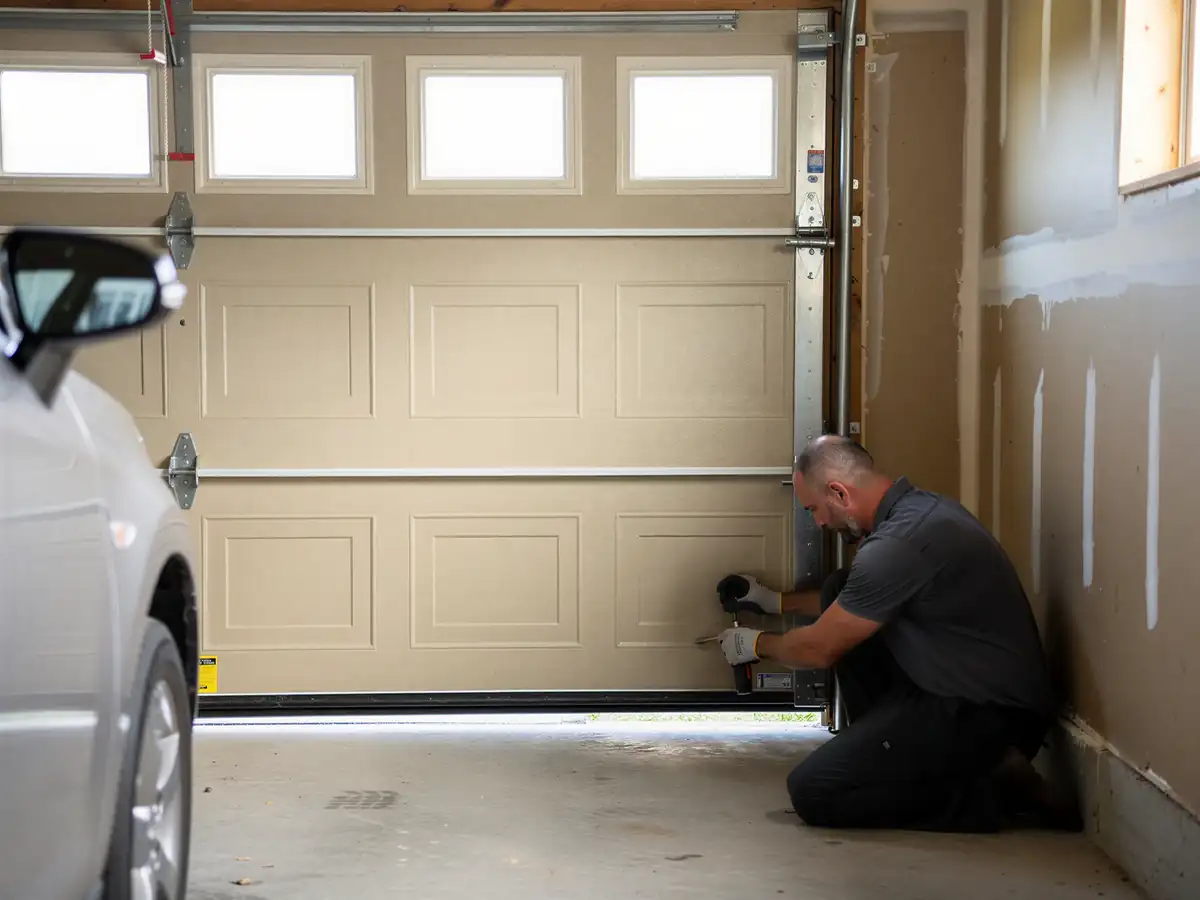
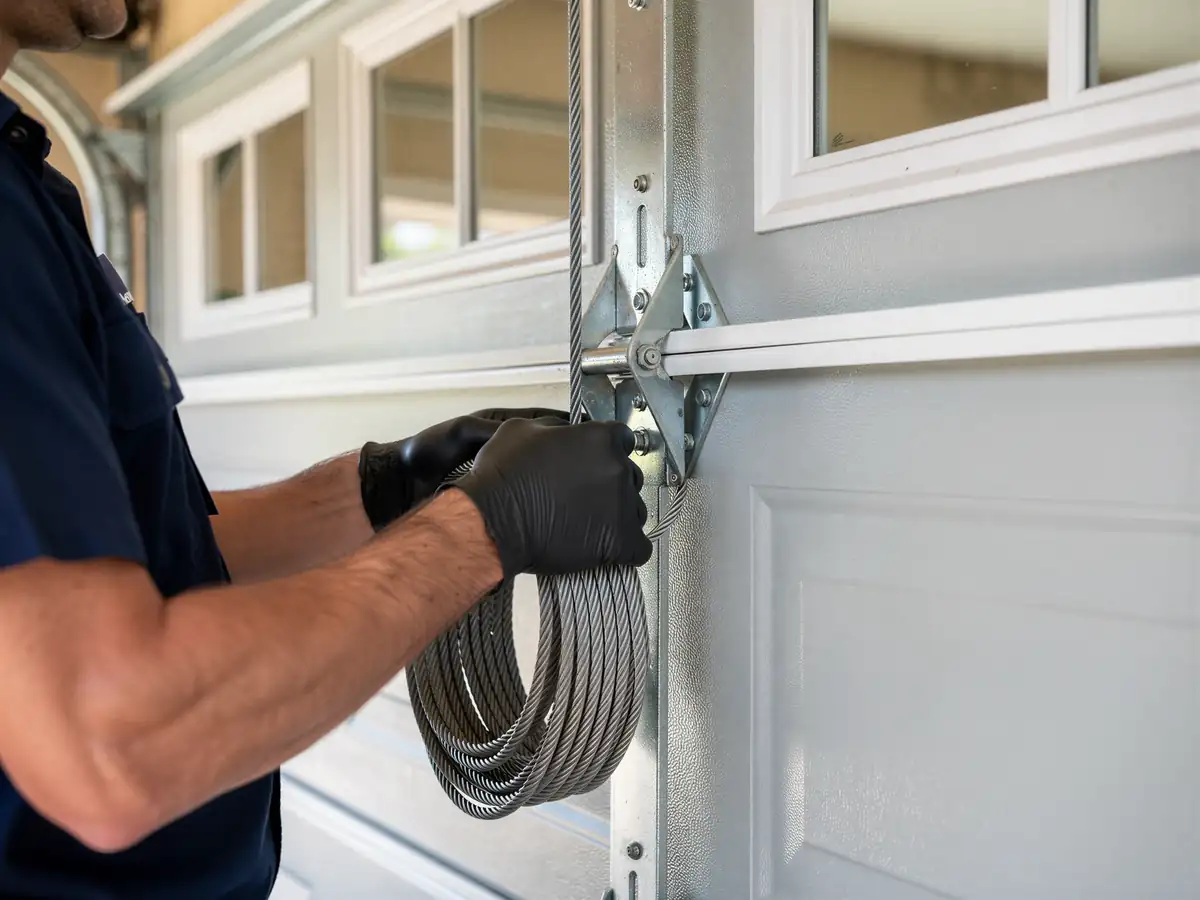
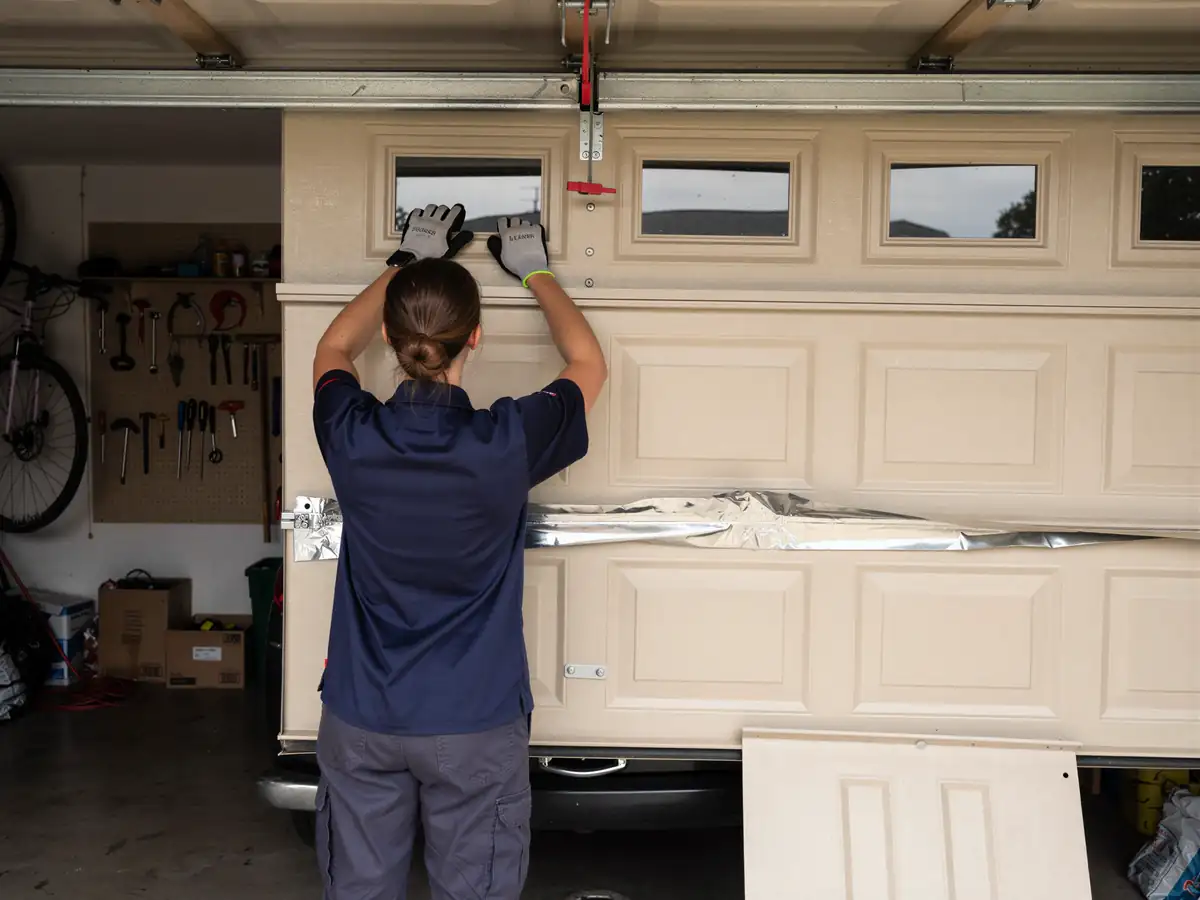
We measure the actual opening before we order anything: width, height, header clearance, and how far out of square the jamb has drifted. That measurement decides the track radius, the spring weight, and whether the door needs field-trimmed jamb seal or a replacement jamb section first.
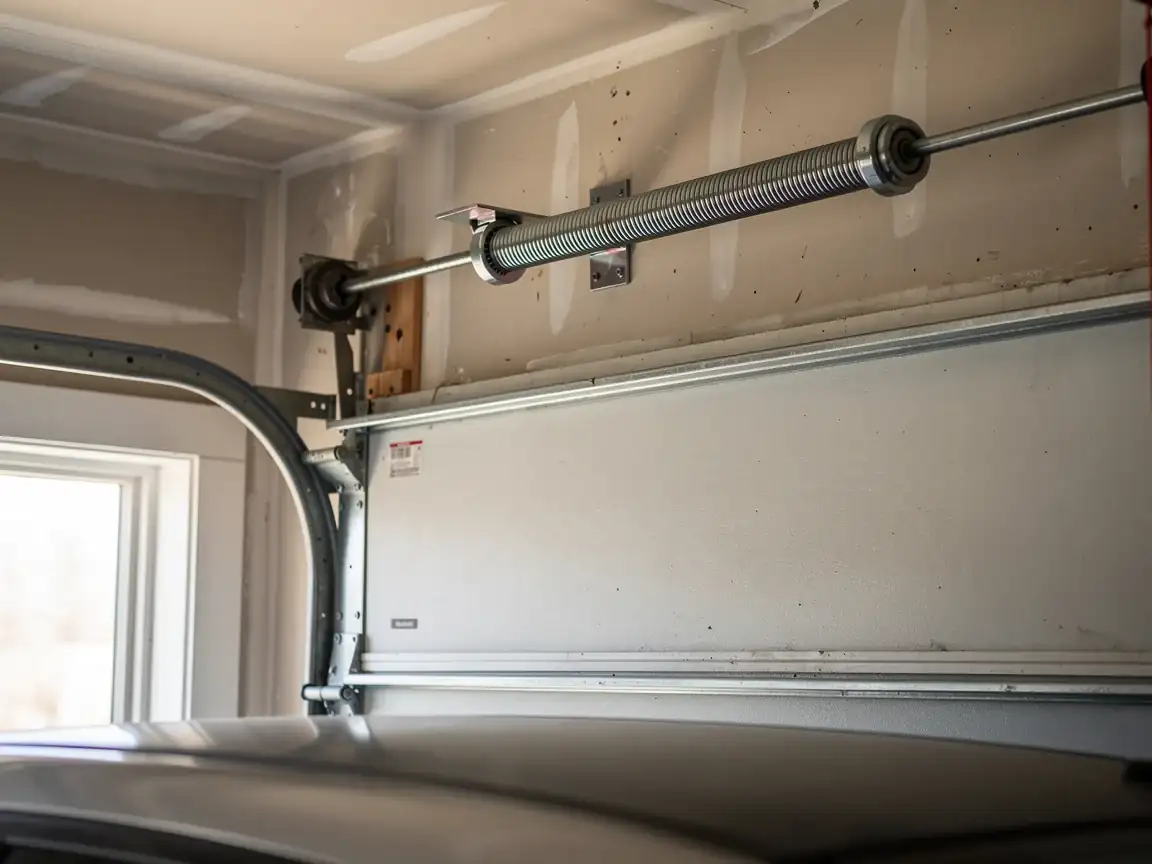
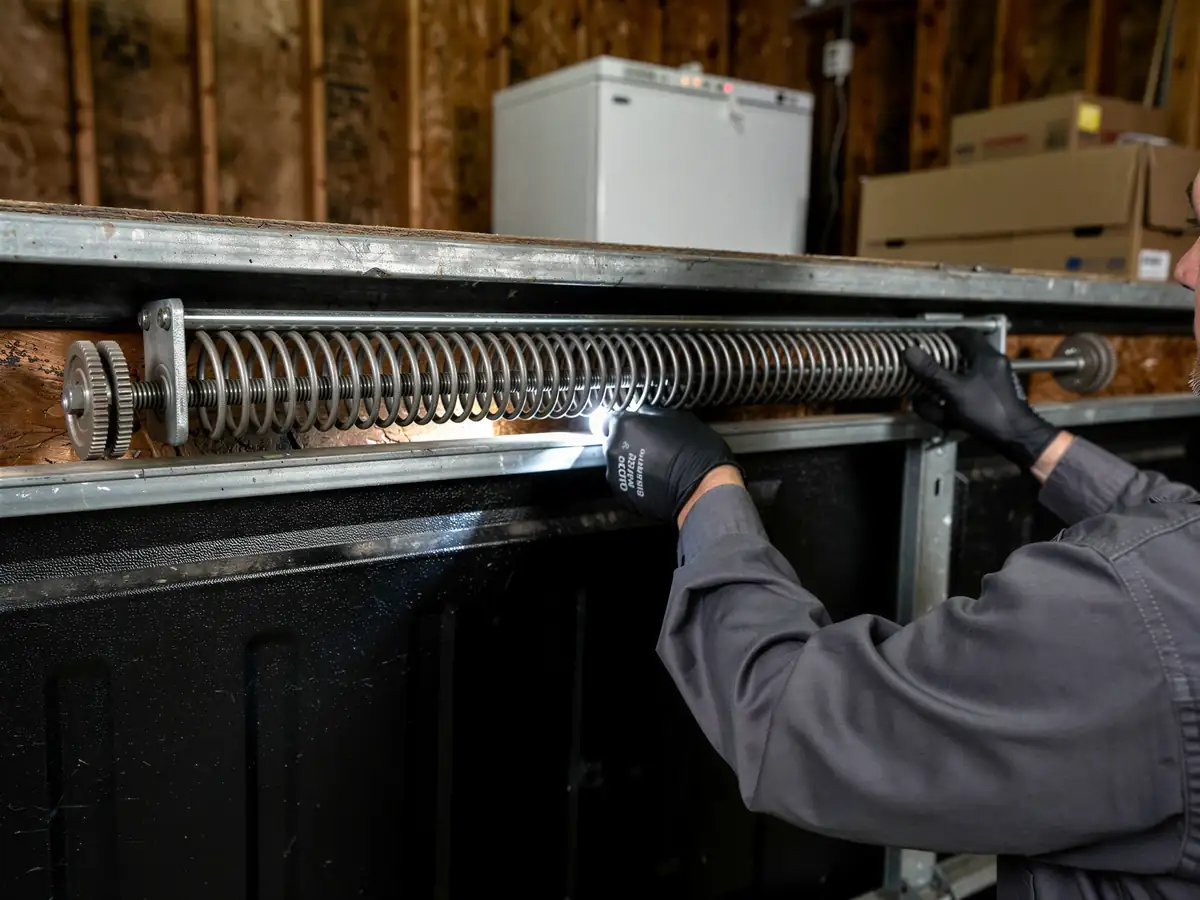
For houses with the original 1960s-era header clearance, we spec low-headroom track hardware rather than trying to wedge standard torsion springs into a space they weren't built for. For panel doors, we match the door weight to the actual spring, not a chart average, since an older solid-wood panel door and a newer insulated steel door can differ by over a hundred pounds on the same size opening.
Here's the honest limit: if your opening is a non-standard width, which does happen on some of the older custom-built garages in this area, the correct panel isn't something we carry on the truck. That's a special order, and it takes longer than a same-week install. We'll tell you that up front rather than installing something close-enough and letting you find out later.
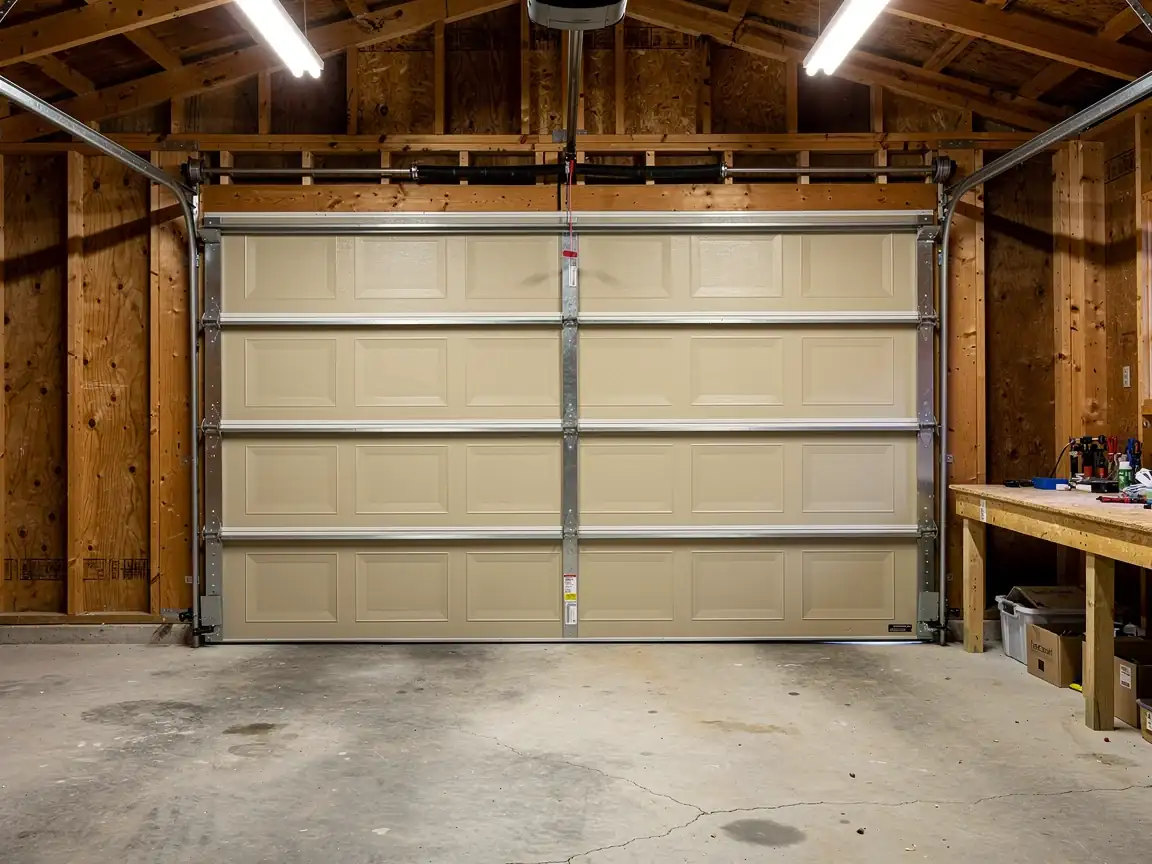
Once the opening is squared and the hardware matches the actual door weight, the install itself is routine work: track up, spring set and balanced, opener mounted and travel limits set to the real door, not a factory default.
How It Shows Up
If you're in one of the neighborhoods close to the core of Inglewood, within a couple miles of spots like just north, you're squarely in that 1960s-and-70s housing band. The symptoms of a mismatched install show up the same way on most of these houses.
A door that drags on one side as it closes usually means the track isn't parallel to an out-of-square jamb. A door that reverses on its own partway down the opener's travel is often an opener's auto-reverse sensing a real resistance point, which means the track or spring tension is fighting the opening rather than working with it. Daylight at one bottom corner but not the other is a leveling problem traced back to the same root cause: hardware set for a square opening in a house that isn't quite square anymore.
None of this is really an opener problem, even though the opener usually gets blamed first since it's the part that makes noise about it. It's a fit problem. An opener swapped onto badly fitted track will struggle the same way the old one did, just with a new motor doing the struggling.