The DIY Question
You can buy a replacement panel online and bolt it in yourself if the door is still a common width and the manufacturer still makes that profile. That's the whole question, really: does the profile still exist. A lot of homeowners find the part number stamped on the panel, search it, and get nothing current. Some give up and live with the dent. Others order a "close enough" panel and end up with a seam that doesn't sit flush against the hinge stile, which strains the roller track every time the door cycles. We're not against DIY on this - a cosmetic ding on a panel you can still source is an easy afternoon job. The trouble starts when the door is old enough that the panel was discontinued years ago, which in this area is common, not rare. At that point ordering parts becomes a research project with no guaranteed ending, and the return on your time drops fast.
How We Fix It
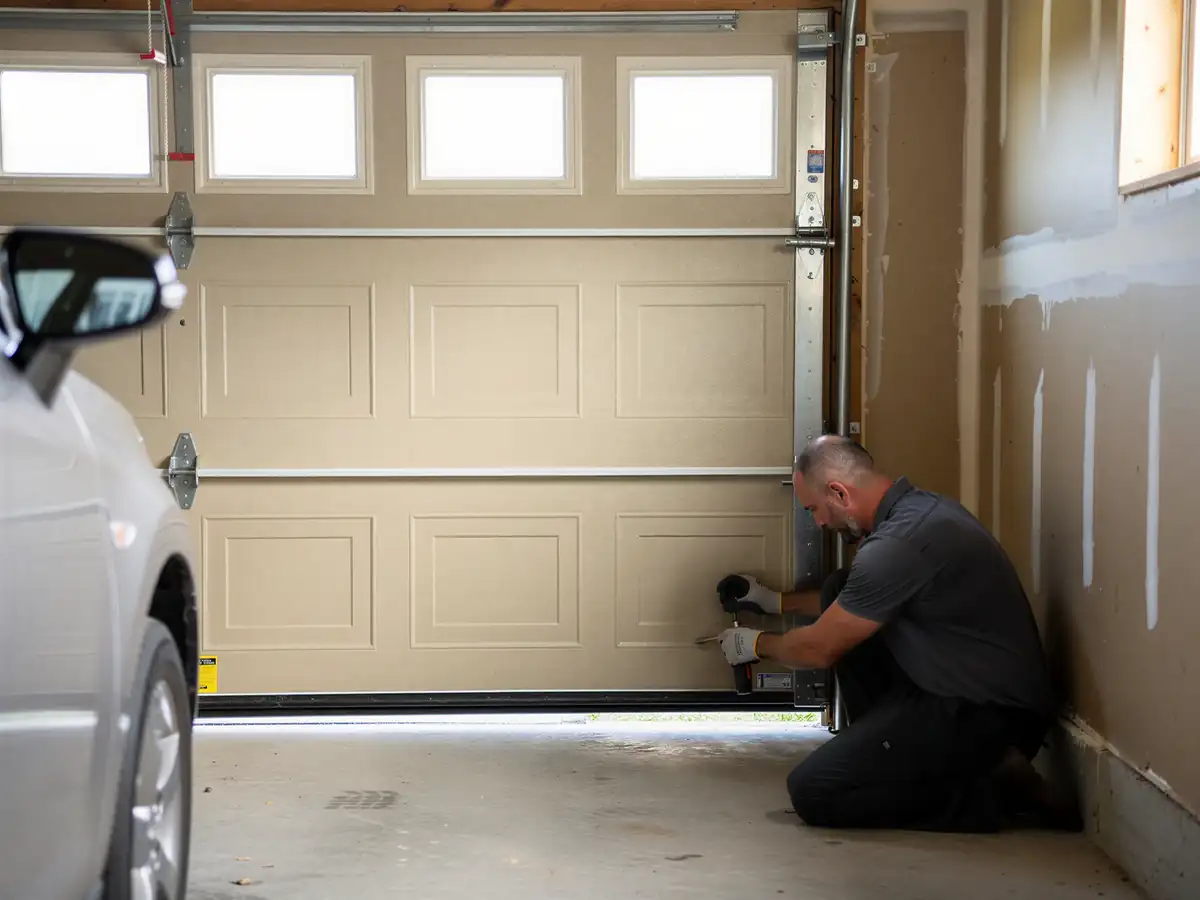
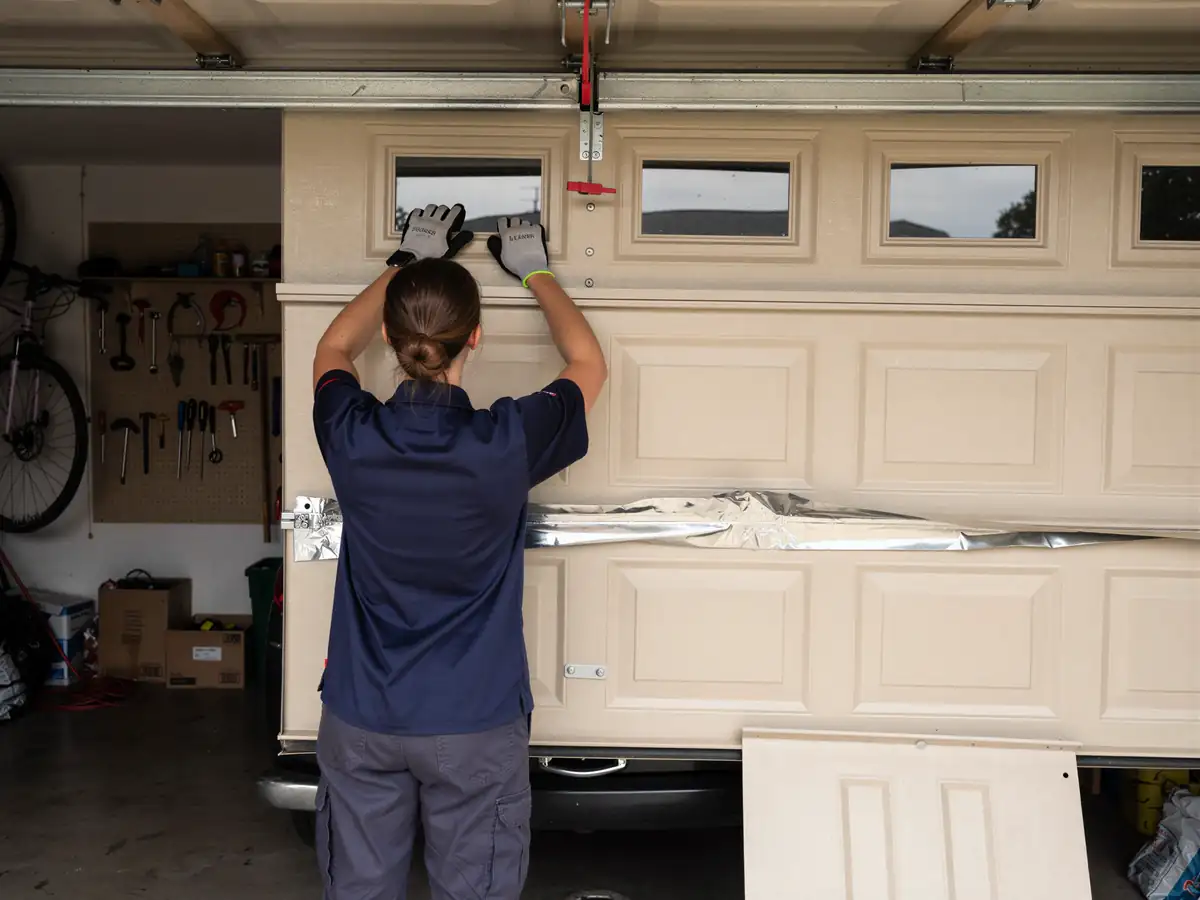
First we identify what door you actually have - brand, panel height, groove style - and check whether that specific panel is still manufactured. If it is, we order and install it, and the fix is straightforward. If it isn't, we tell you that up front instead of installing a mismatched panel and pretending it's a clean repair. At that point you've got two honest choices: live with a slightly different panel (fine for a side-facing door nobody looks at), or replace the full door, since once a profile is discontinued, matching gets harder with every year you wait. We don't carry every panel style on the truck, and lead times on less common profiles can run longer than homeowners expect, which is the limitation worth knowing before you call. What we won't do is force a panel that doesn't fit the stile just to call the job done - that creates a hardware problem on top of the cosmetic one.
How It Shows Up
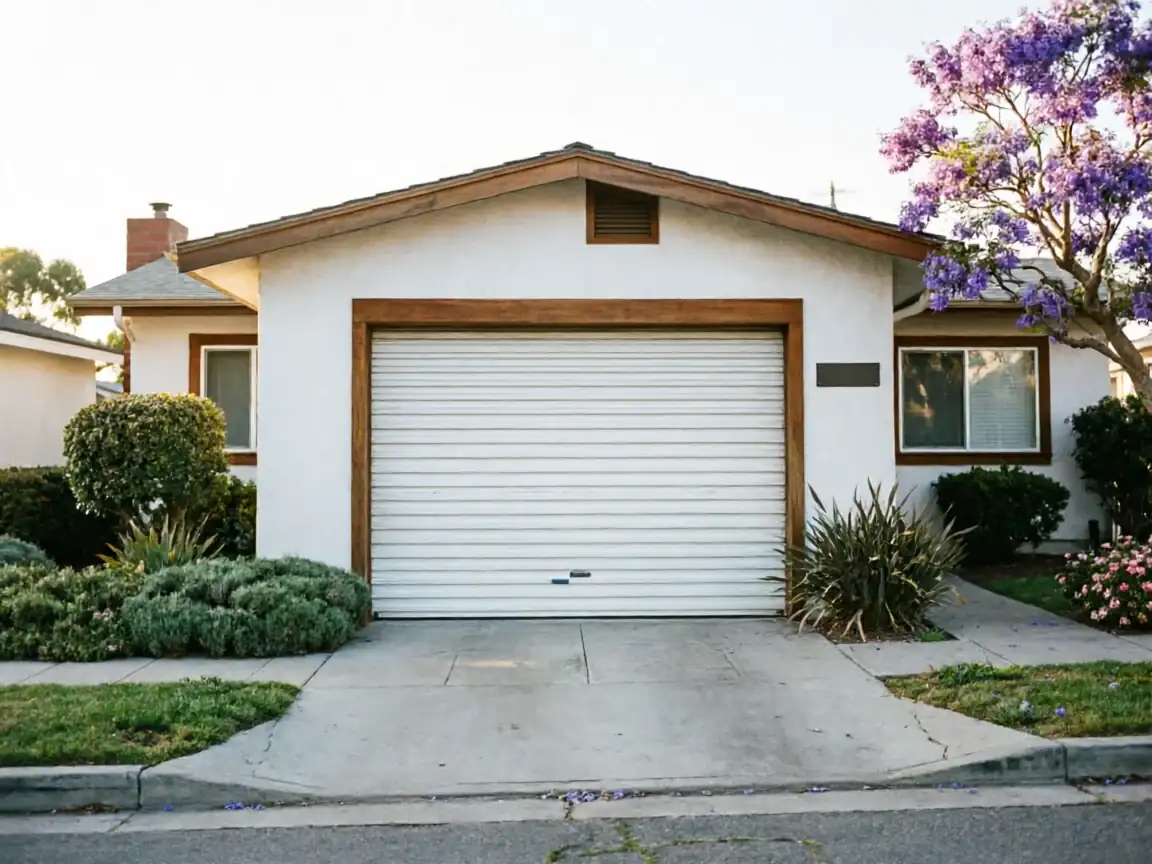
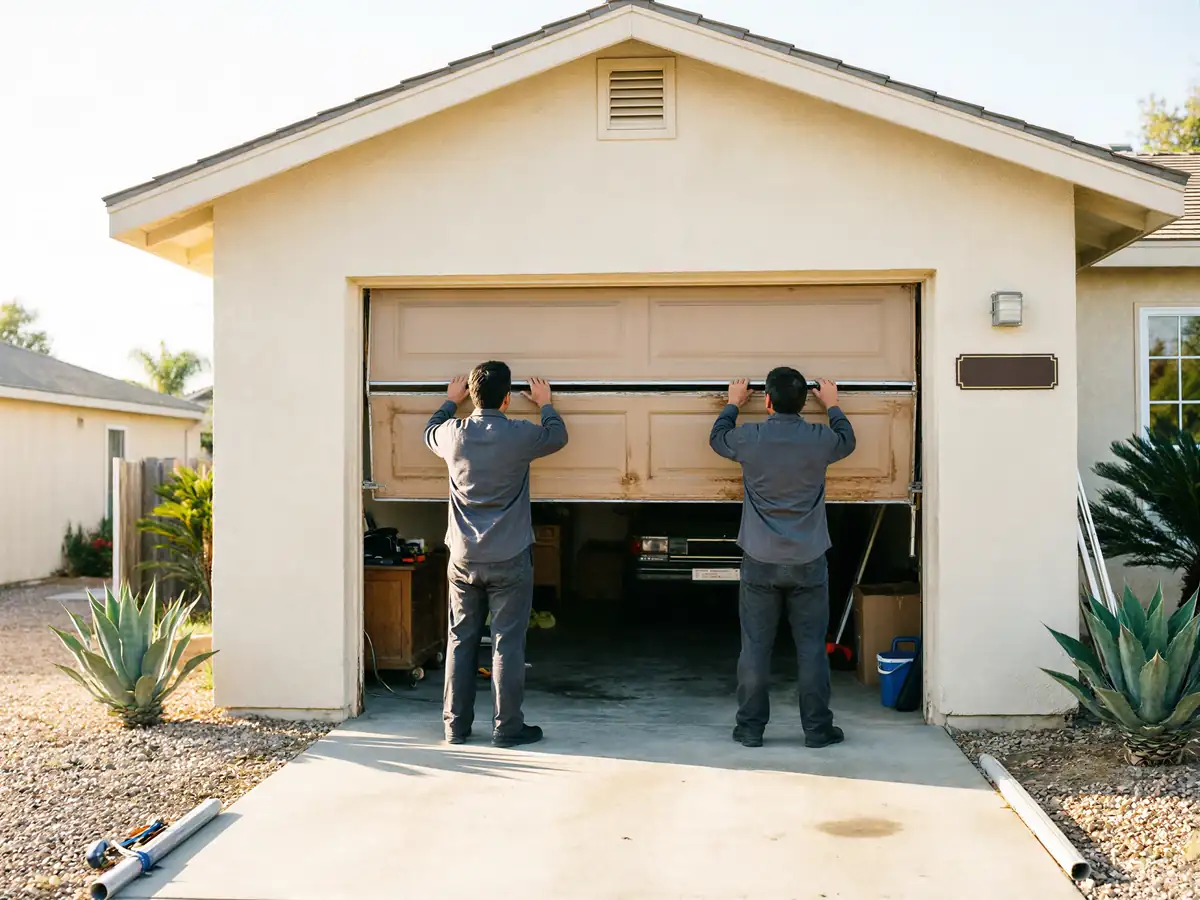
The most common call is a dent from a car bumper or a thrown object, usually on the bottom panel. Next is rust, often starting at the bottom edge where a sprinkler head or low irrigation line hits the door directly, something we see a lot given how many houses here have front-facing garages close to planted beds. Cracked seams along a panel edge show up on doors that have been cycling since the 1960s-70s building wave, where the steel has simply fatigued at the fold lines. And then there's the fade mismatch: a homeowner gets one panel replaced years after the original install and the new panel's paint is noticeably brighter than the rest of the door, which isn't a defect, it's just years of sun doing what sun does in this climate.