How Long It Takes
Norwalk is home to 26,801 households, enough that a single truck can't treat it as a side errand. We schedule Norwalk calls as a run from Inglewood, about 15 miles out, which means we're honest about windows rather than promising a rush visit we can't back up. If you call in the morning, you're more likely to land an afternoon slot than a guaranteed hour, because the drive itself is part of the job, not an afterthought.
What slows a job down here isn't traffic, usually - it's parts. A fair share of Norwalk's housing stock dates to around 1957, a few years ahead of the 1961 median across the wider area we cover. Original torsion hardware from that era sometimes needs a part that isn't sitting on the truck, and we'd rather tell you that up front than stretch a visit out pretending we're still working. If we have to order something, we'll say so at the door, not after we've already started.
Getting It Booked In
Booking is simple: call or use the coverage page for Norwalk to confirm we cover your address
Then describe what the door is doing - won't open, drags on one side, opener clicks but nothing moves. That detail changes what we load on the truck before we ever drive the 15 miles out.
- 15 miles
Because Norwalk sits outside our Inglewood base, we batch visits where we can
So a specific appointment window works better for us and for you than an open-ended "sometime today." If your situation is urgent - the car's trapped, the door won't close and won't lock - say that when you call, and we'll tell you honestly where that falls in the day rather than guessing out loud.
See the Norwalk coverage page for what's included
And the main Inglewood repair page covers the rest of what we do beyond this one job.
How It Shows Up
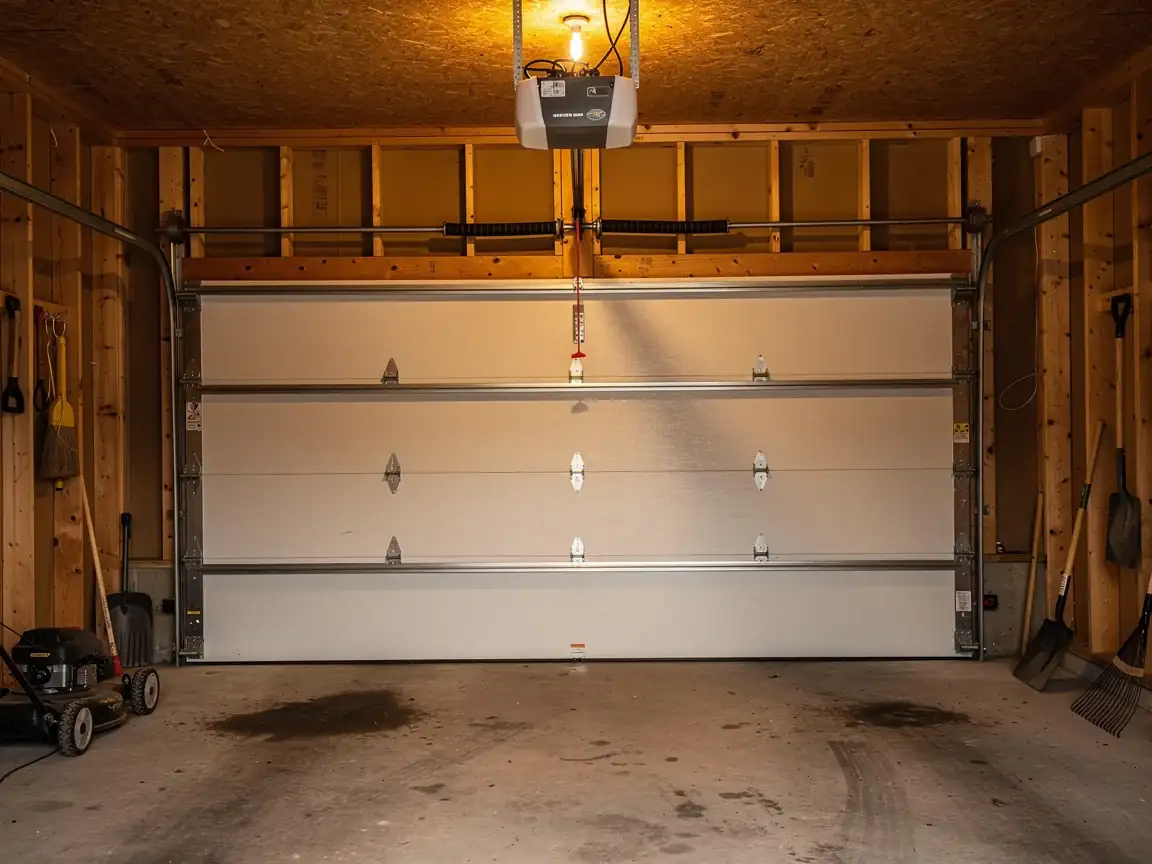
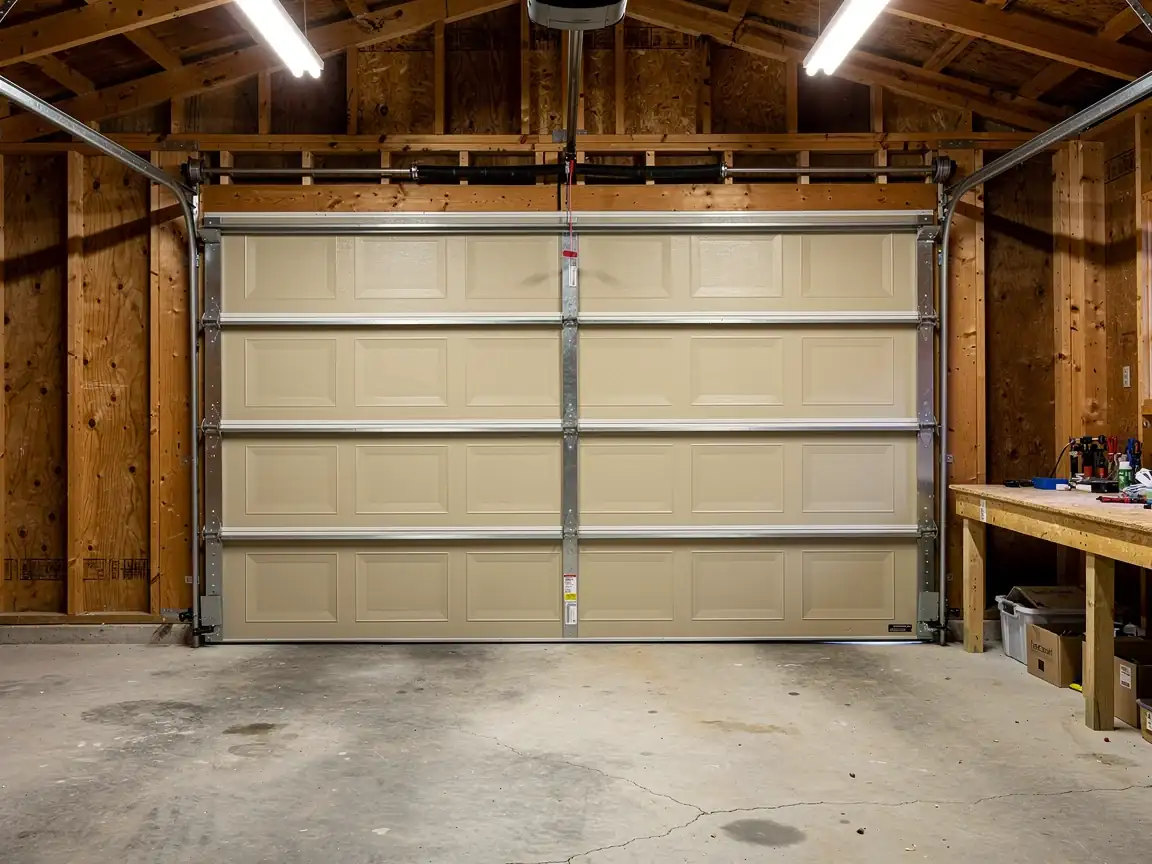
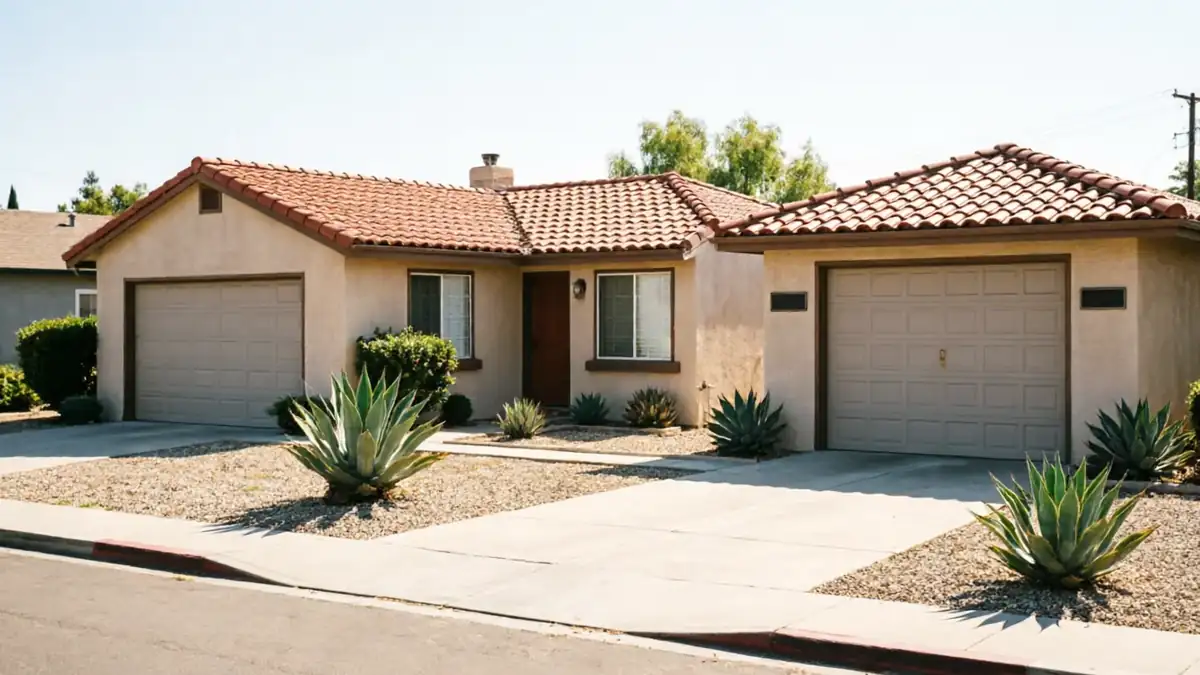
With most of Norwalk's housing dating to around 1957, the doors we open here skew older than what the 1943-2012 range across the rest of the service area would suggest. That means original one-piece doors, torsion springs that have never been swapped, and rollers that have outlived two or three owners of the house.
The mild temperate climate here isn't the driver of failure the way it would be somewhere with hard freezes or heavy humidity swings - you're not fighting rust from salt air or wood warp from damp winters. What you're fighting is straight metal fatigue: a spring cycles tens of thousands of times over 60-plus years and eventually just lets go, usually on a cold morning when the garage hasn't moved in a day. Cables fray at the drum. Nylon rollers crack and seize in the track. None of that is dramatic - it's just age catching up with hardware nobody's touched since it was installed.
How We Fix It
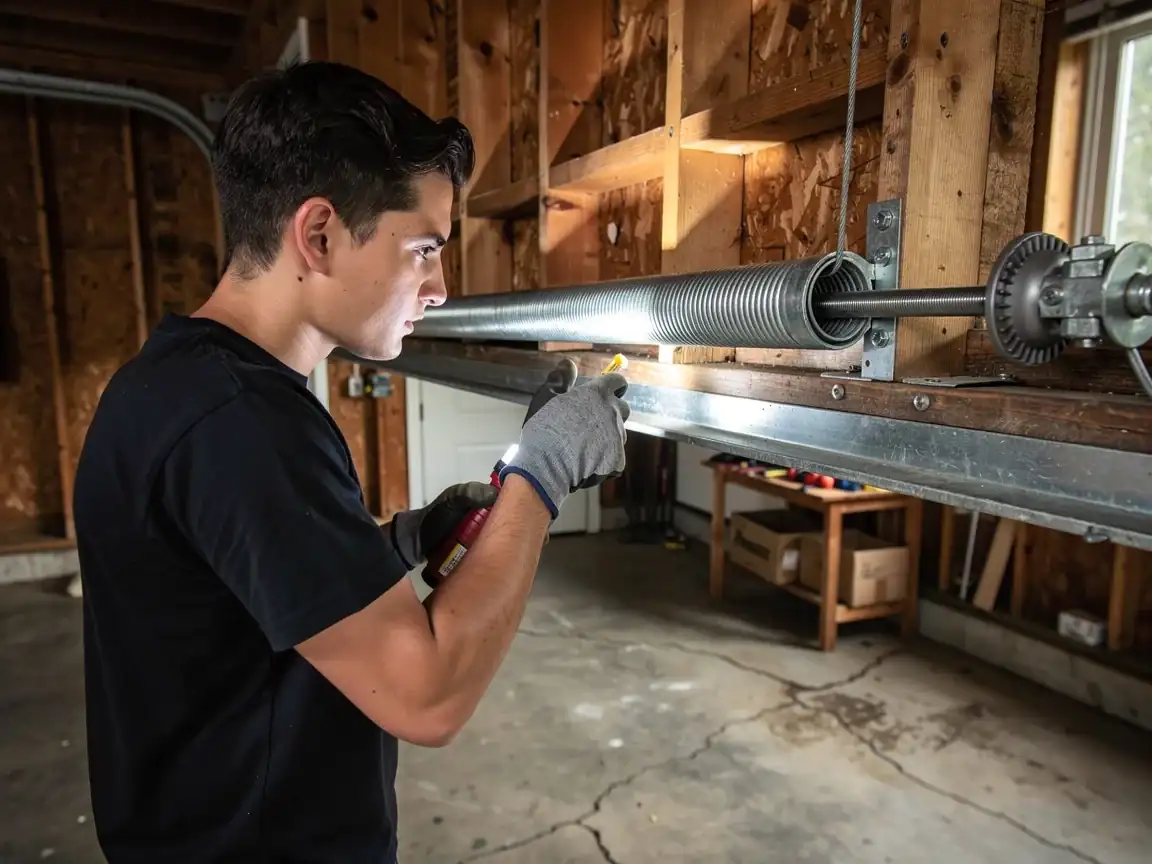
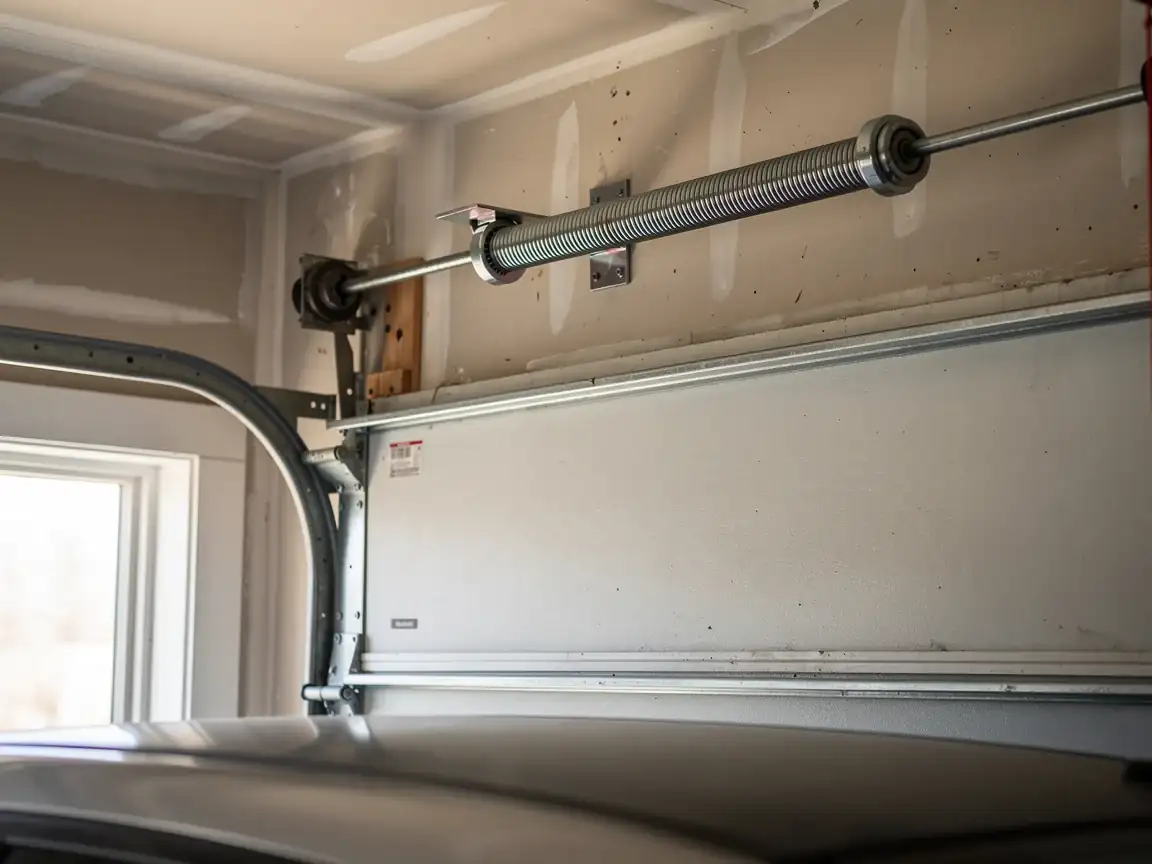
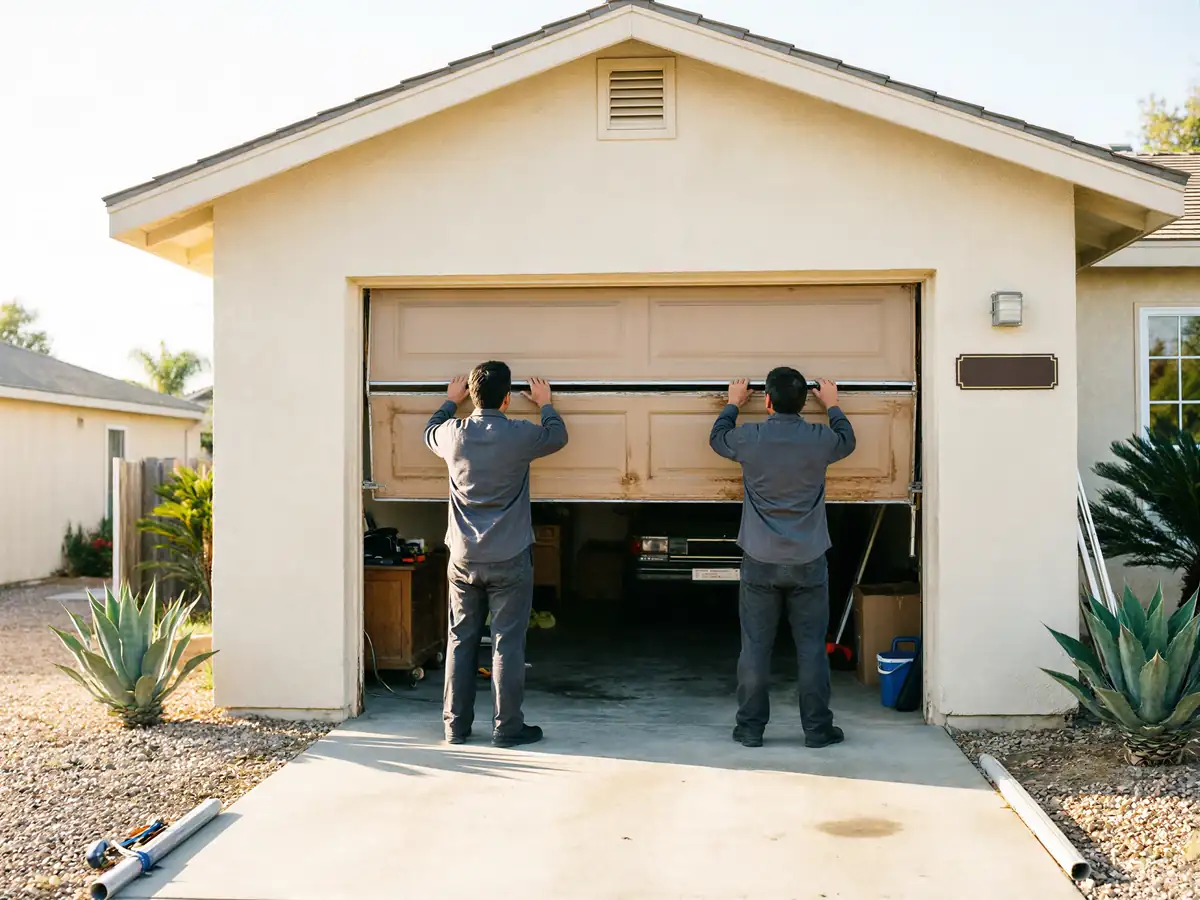
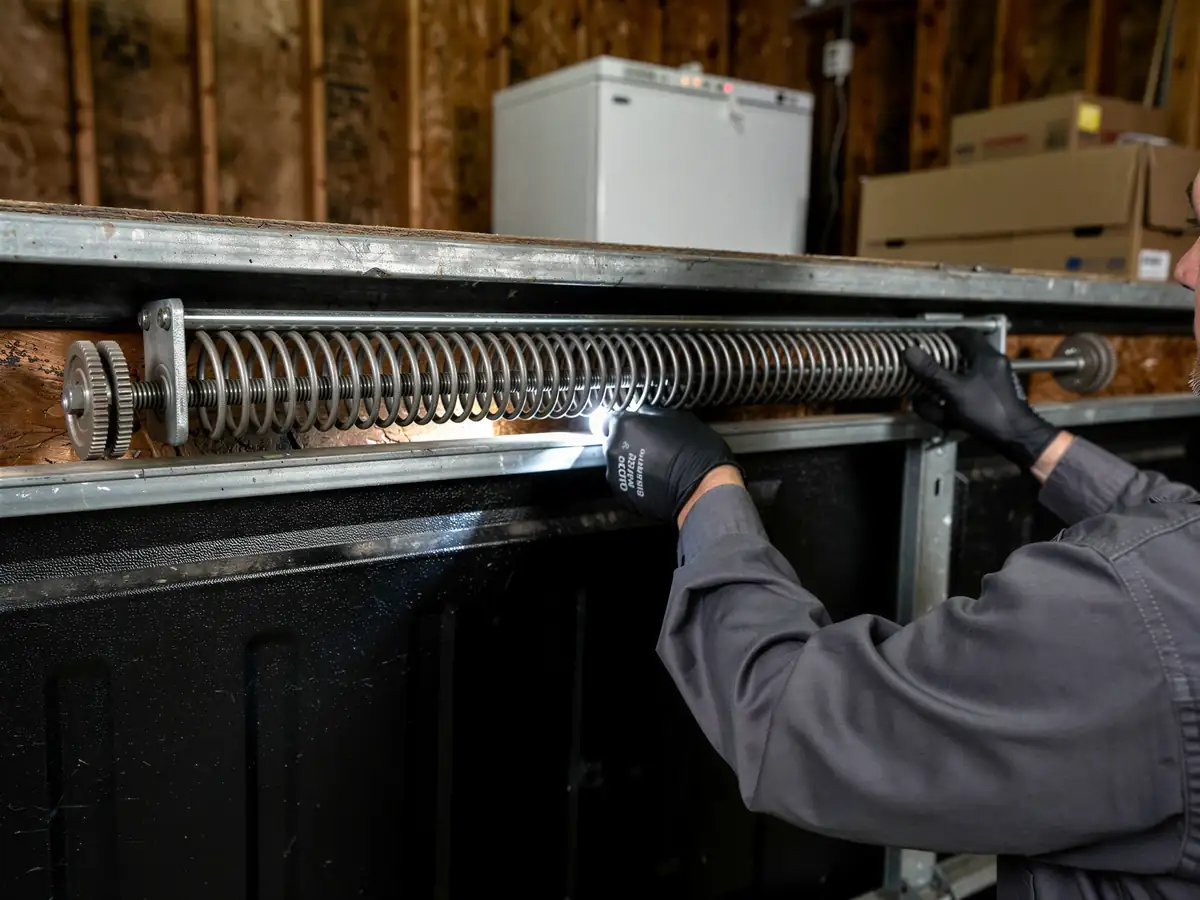
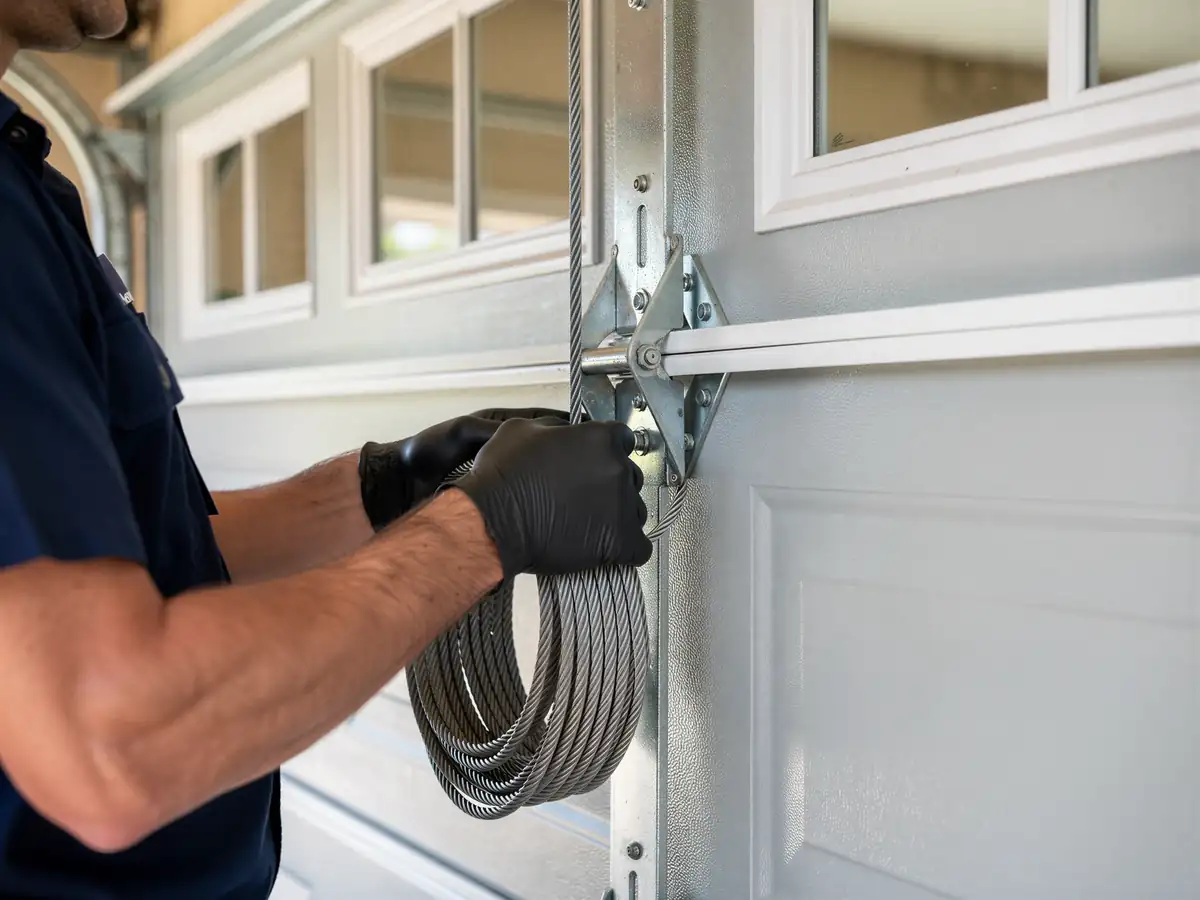
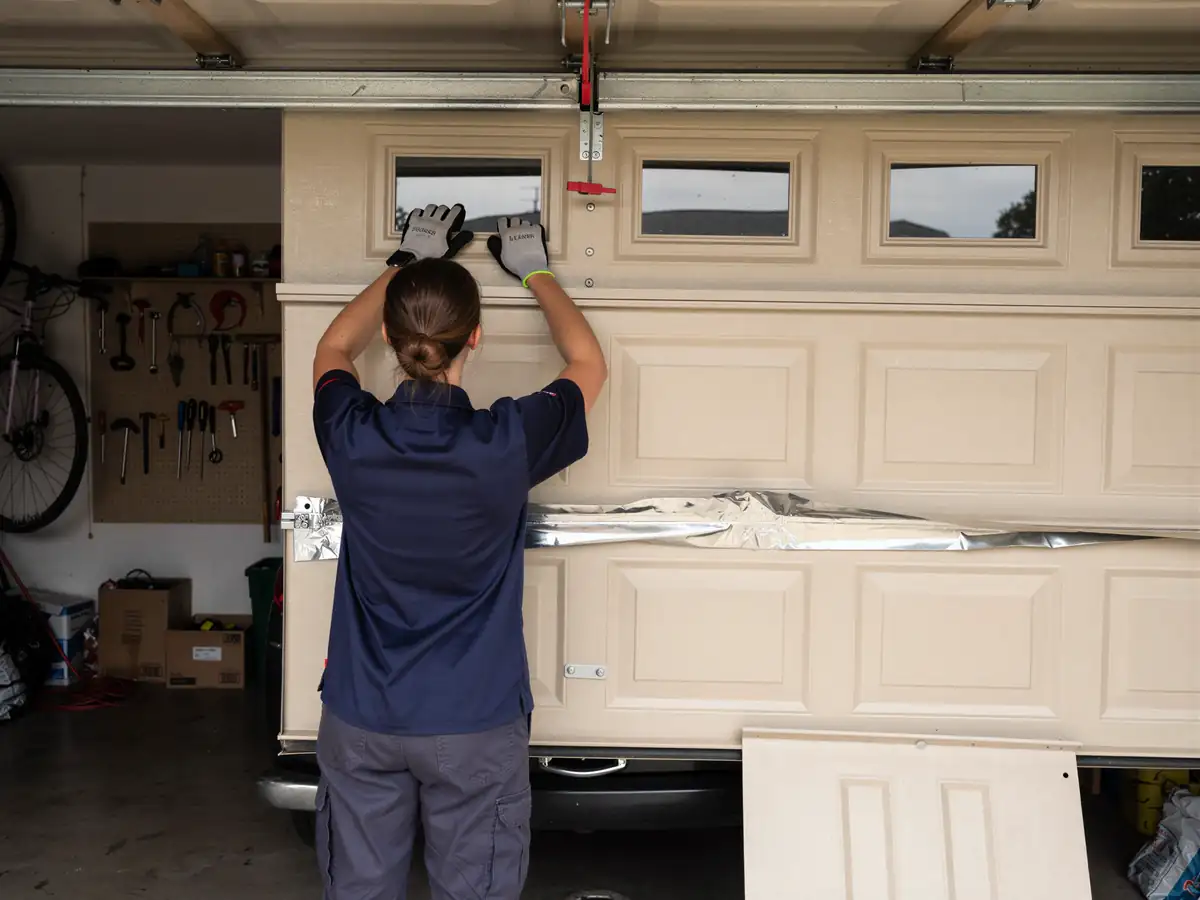
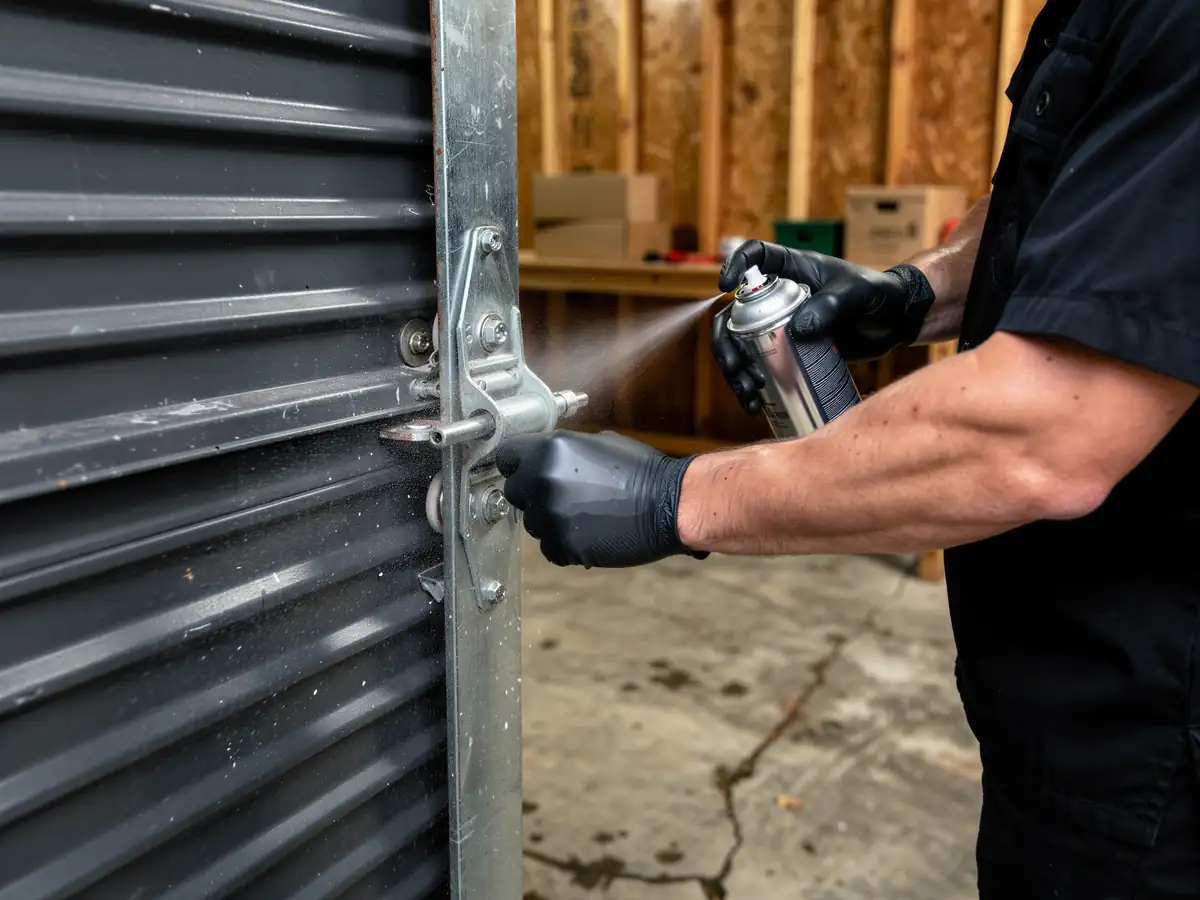
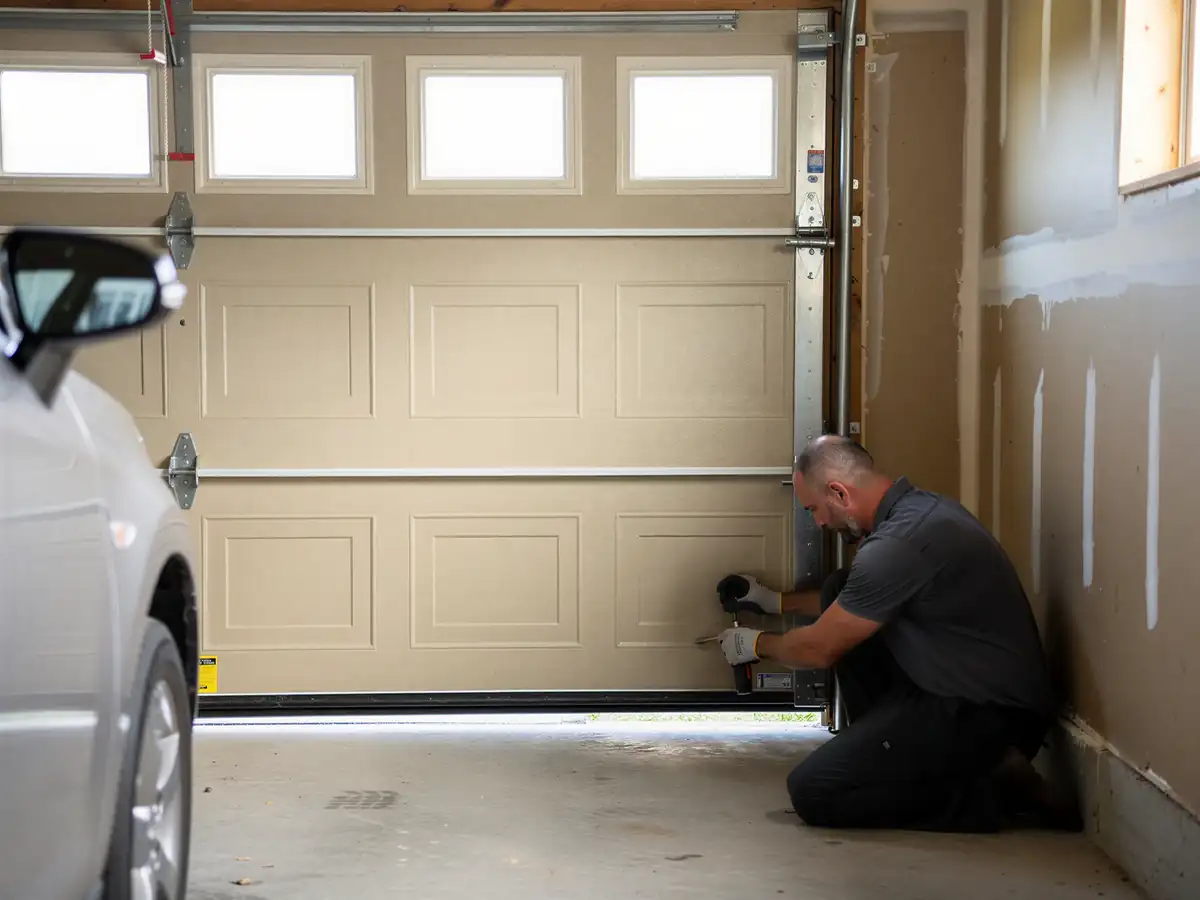
For a broken torsion spring or a snapped cable, we replace the part, check the opposing spring for wear since springs are sold and aged in pairs, and test the balance before we call it done. For a door that's off-track or binding, it's usually a bent roller bracket or a track that's worked loose from the jamb over the decades - tightened or straightened, not replaced, if the track itself is still square.
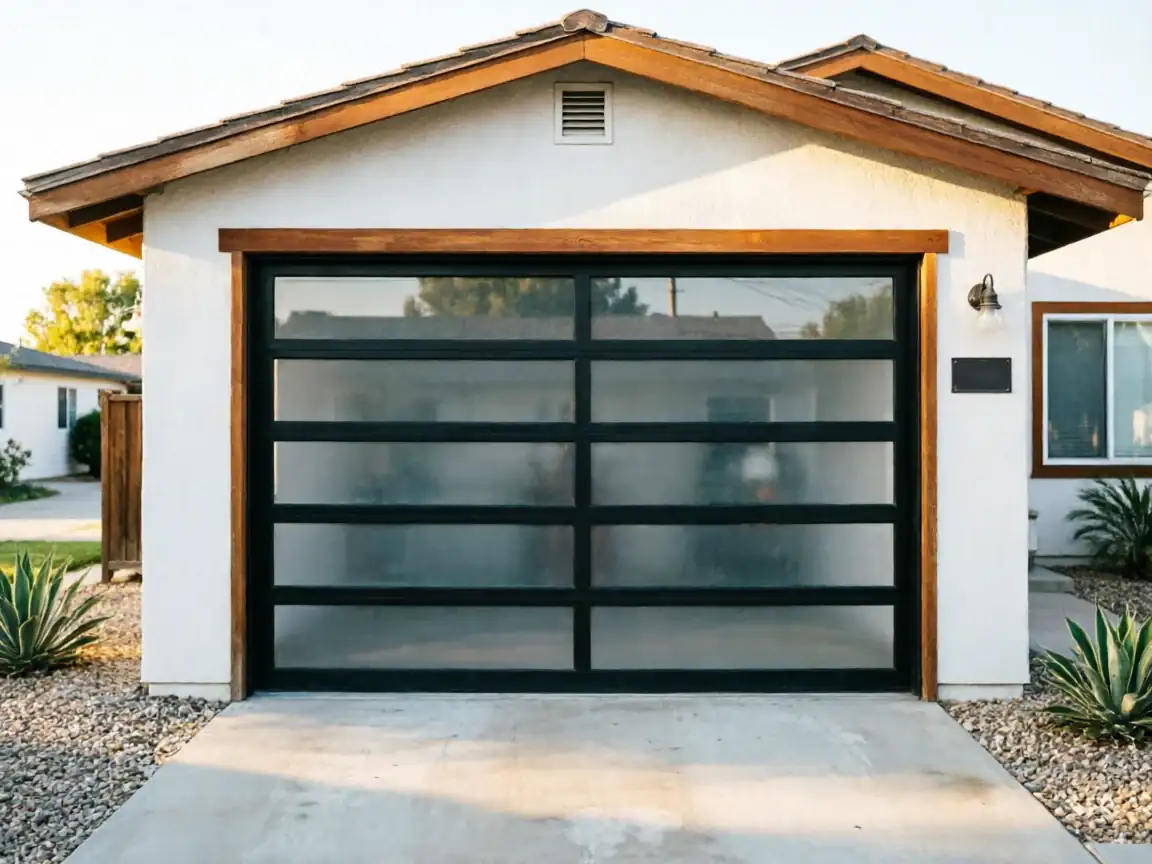
Here's the honest limit: if a door is original to a 1957 build and the track or drum is a size nobody stocks anymore, repair can mean waiting on a special-order part, and sometimes a full replacement door actually costs less than chasing down obsolete hardware. At $98,709, Norwalk's median household income runs a bit above the $93,882 average across the area we cover, and in practice that shows up as more homeowners choosing a clean insulated steel replacement over a patched-together repair once we lay out both costs. We'll tell you which option makes sense for your door, not just which one we'd rather sell.