Serving Inglewood, CA & nearby
(424) 237-3669
Inglewood, CA

Garage Door Repairs for Westmont's 1950s Housing Stock

Westmont homes mostly date to 1958, older than the area's 1961 median. Inglewood Garage Door Pros repairs the springs and openers built for that era.

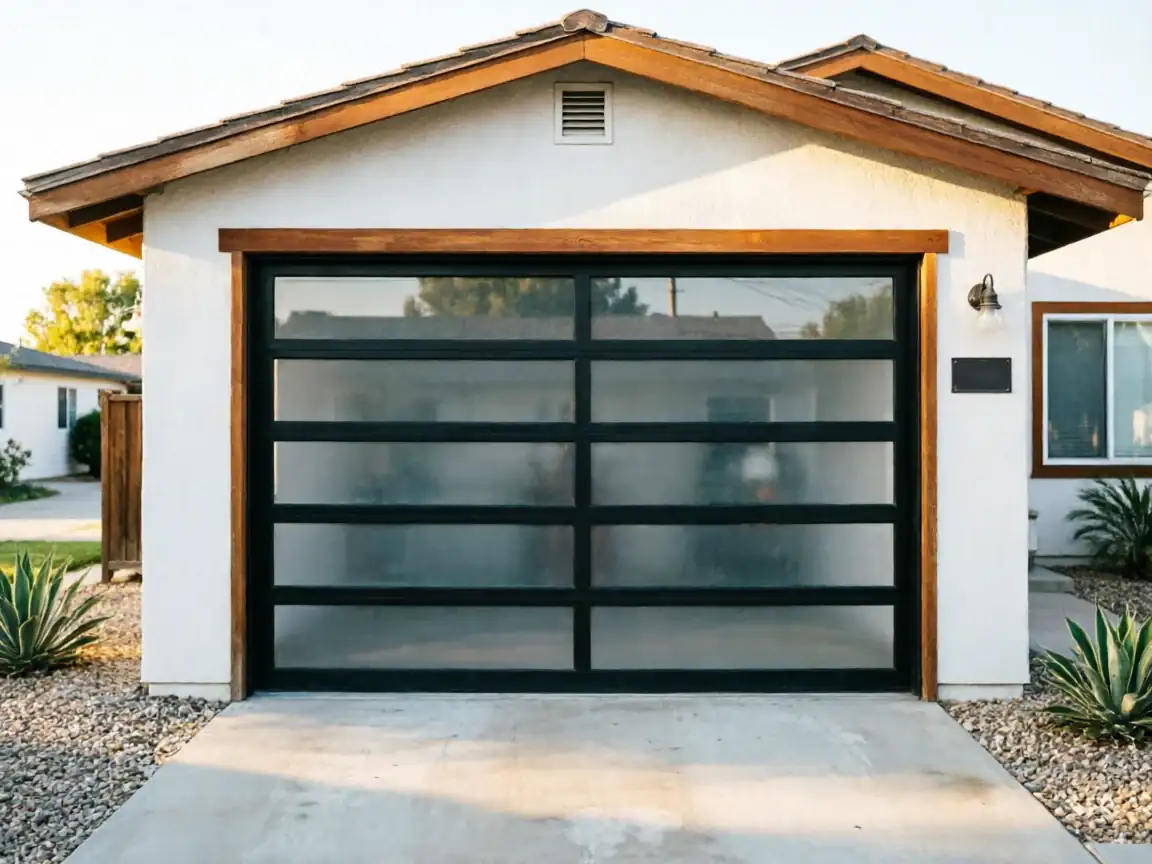
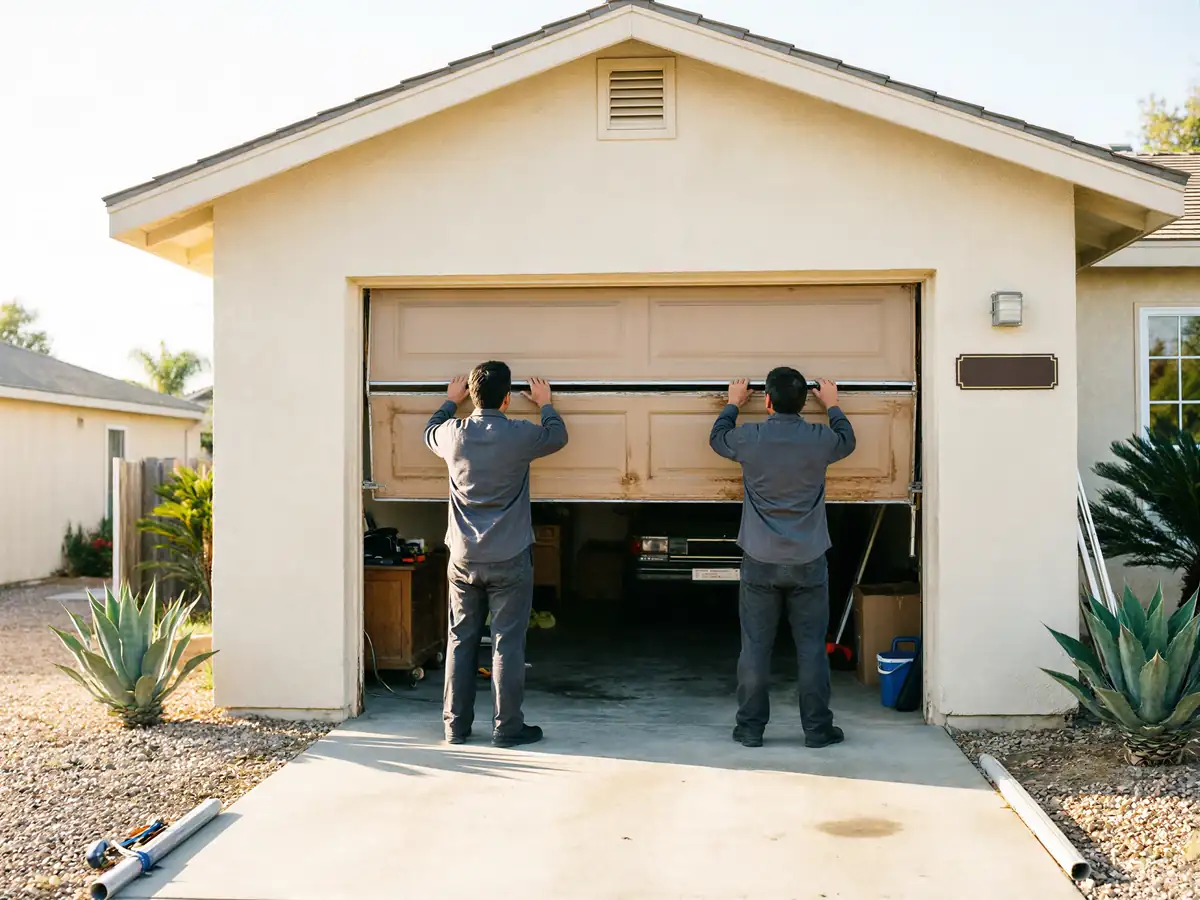
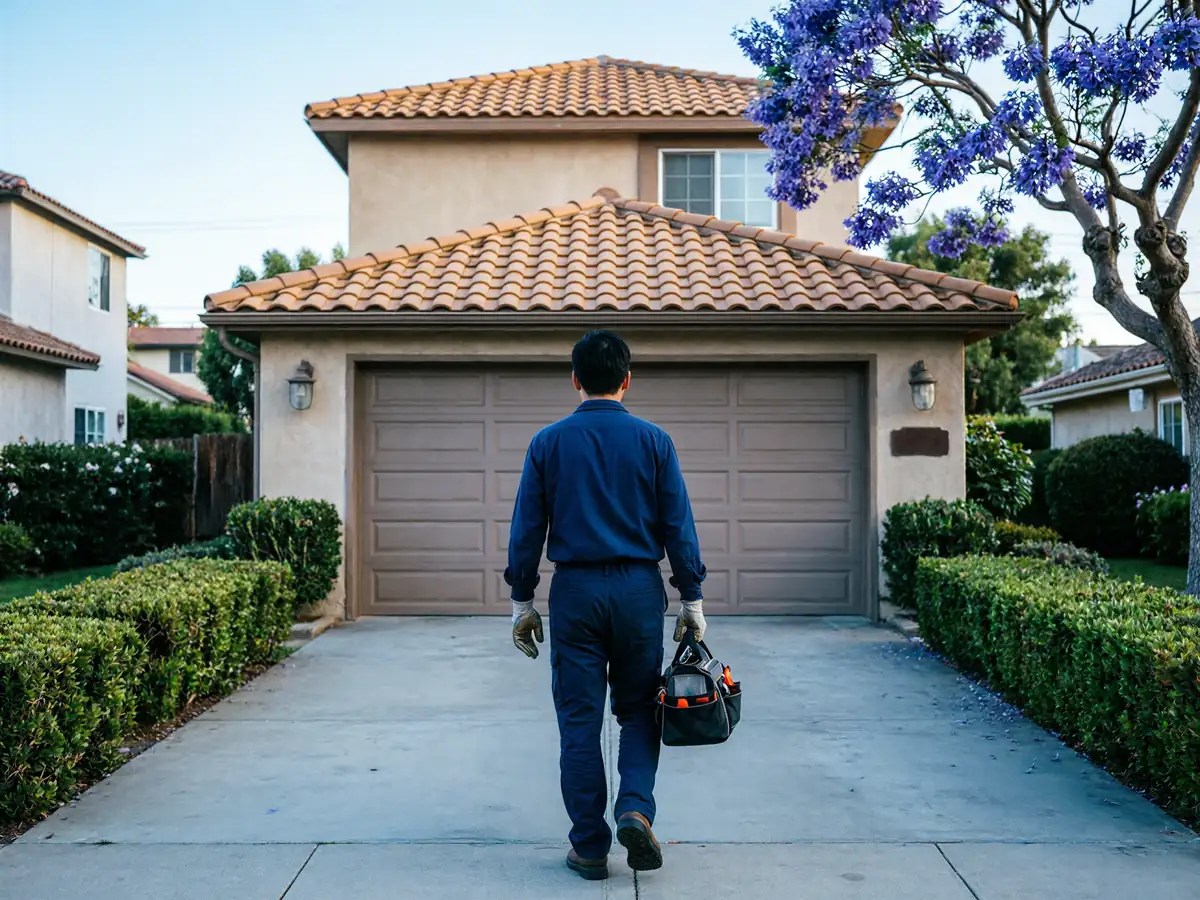
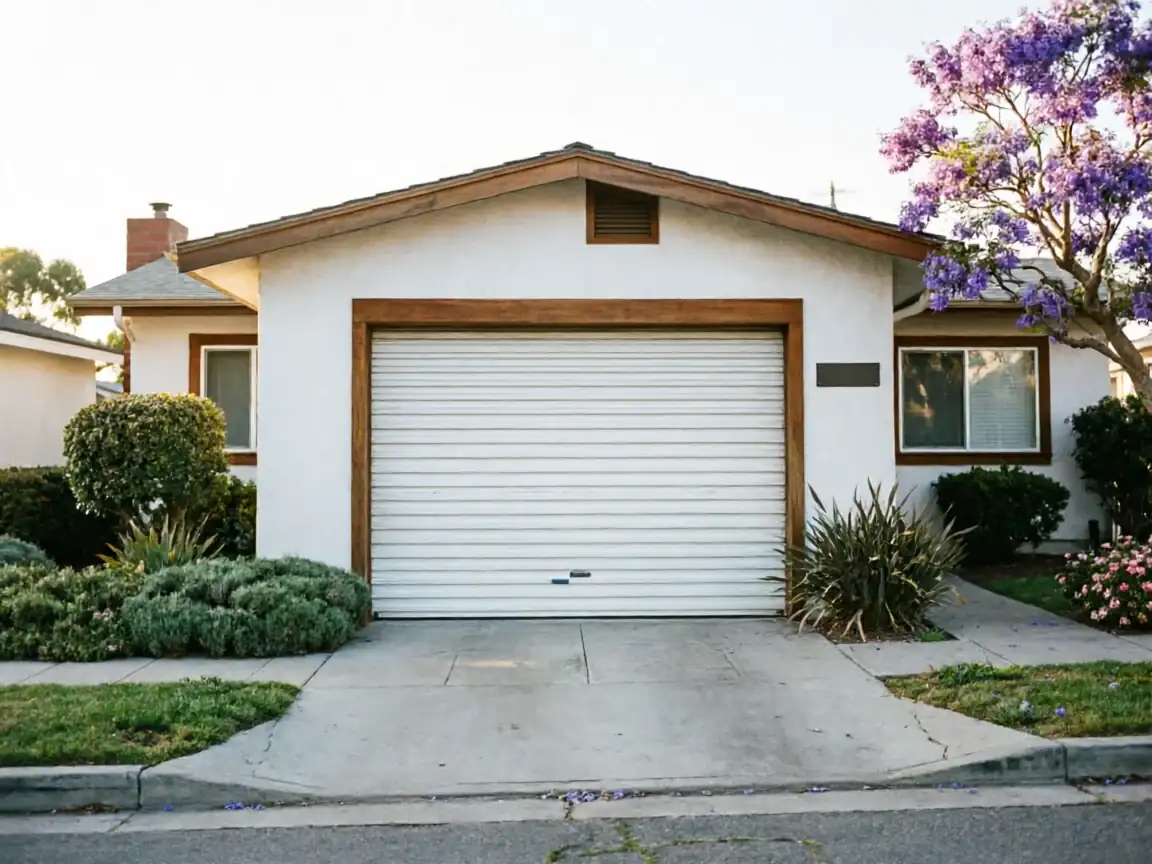
The white house has a white garage door, a driveway, and landscaping.
Inglewood, CA
8 services
8 service areas
Diagnosis first, then the fix

How We Fix It

Most of the service area Inglewood Garage Door Pros covers sits on housing built between 1943 and 2012, with a median year of 1961. Westmont skews older than that - 1958 is the typical build year here, which puts a lot of these garages on the early side of the postwar boom rather than the tail end of it. That matters because the hardware changed over those decades. A door hung in 1958 is more likely to have a lighter-gauge steel panel, older-style hinges, and a torsion spring sized for a lighter door than what you'd find on a house built in 1975 two towns over. We carry stock for both eras, but when we get a call from this part of the service area, the first question on the truck is whether the spring and drum match factory spec or whether a prior owner swapped in a replacement that's close but not right. Fixing it means matching the actual door in front of us, not whatever's easiest to grab. On the mild temperate climate this area sits in, we're not dealing with frozen tracks or wood doors swollen shut from humidity - the failures here are almost always mechanical wear, not weather damage.

The DIY Question

Median household income in Westmont runs about $47,899, less than half the $93,882 figure across the wider service area. That gap shapes a real decision a lot of homeowners here are weighing: fix the door that's acting up, or let it go another year. We're not going to tell you every repair is urgent. A torsion spring that's starting to sound rough but still lifts the door fine can usually wait for a scheduled visit rather than an emergency call. What we won't recommend is replacing a spring yourself. Torsion springs are wound under enough tension to break bones if the winding bars slip, and that risk doesn't scale down just because the door is older or smaller. Things you can safely check yourself: the photo-eye sensors near the floor, whether the track bolts are loose, whether the opener's force setting has crept too high. Beyond that, especially on a 1958-era door where the spring size often isn't stamped anywhere obvious, it's a call for a tech with a gauge, not a guess.

Getting It Booked In

Westmont sits about 3 miles from our base in Inglewood, close enough that getting a truck out here isn't the bottleneck - scheduling around what parts the job needs usually is. When you call, tell us the age of the house if you know it; on a street of 1950s-era homes, that single detail narrows down spring size and opener compatibility before we even pull up. We book jobs by what the door needs, not a flat time slot, so a spring swap and a full opener replacement aren't quoted the same way. For general service details, repair categories, and what we cover across the rest of the area, the Inglewood garage door service page has the full list. For Westmont specifically, this coverage page is where we keep notes on this stretch of the service area as we work in it.

Where This Job Goes Sideways

The most common surprise on a Westmont call isn't the original hardware - it's what got bolted onto it later. A door built around 1958 and still running has usually had at least one opener swap, and openers installed in the 1990s and 2000s don't always sit well on brackets designed for an older, lighter door. We've seen openers pulling against a header that was never reinforced for the extra weight of a replacement panel. Another spot where things go sideways: replacement panels that don't match. If one section of a door got damaged and swapped out at some point, the new panel's gauge and seam pattern may not match the rest, which throws off the balance point and wears the opener faster than it should. None of this is unusual for a house this age - it's just the kind of thing that turns a five-minute spring job into an hour of checking brackets, header, and balance before we touch the spring at all.

How Long It Takes

A straightforward spring replacement on a single door usually runs under two hours once the truck is on site, parts in hand. Opener swaps take longer, generally half a day with the wiring and safety sensor calibration. What adds time in Westmont specifically is diagnosing before we start - on a door this age, we're often tracing a problem back through at least one prior repair, which means checking brackets and balance before committing to a fix. We don't carry every spring size on every truck run, so if the diagnosis turns up something unusual, there can be a short wait for the right part rather than a same-visit fix. The mild climate here doesn't add weather delays the way cold-climate regions deal with frozen tracks or ice-jammed openers, so once we're scheduled, the job itself moves at a predictable pace.

How It Shows Up

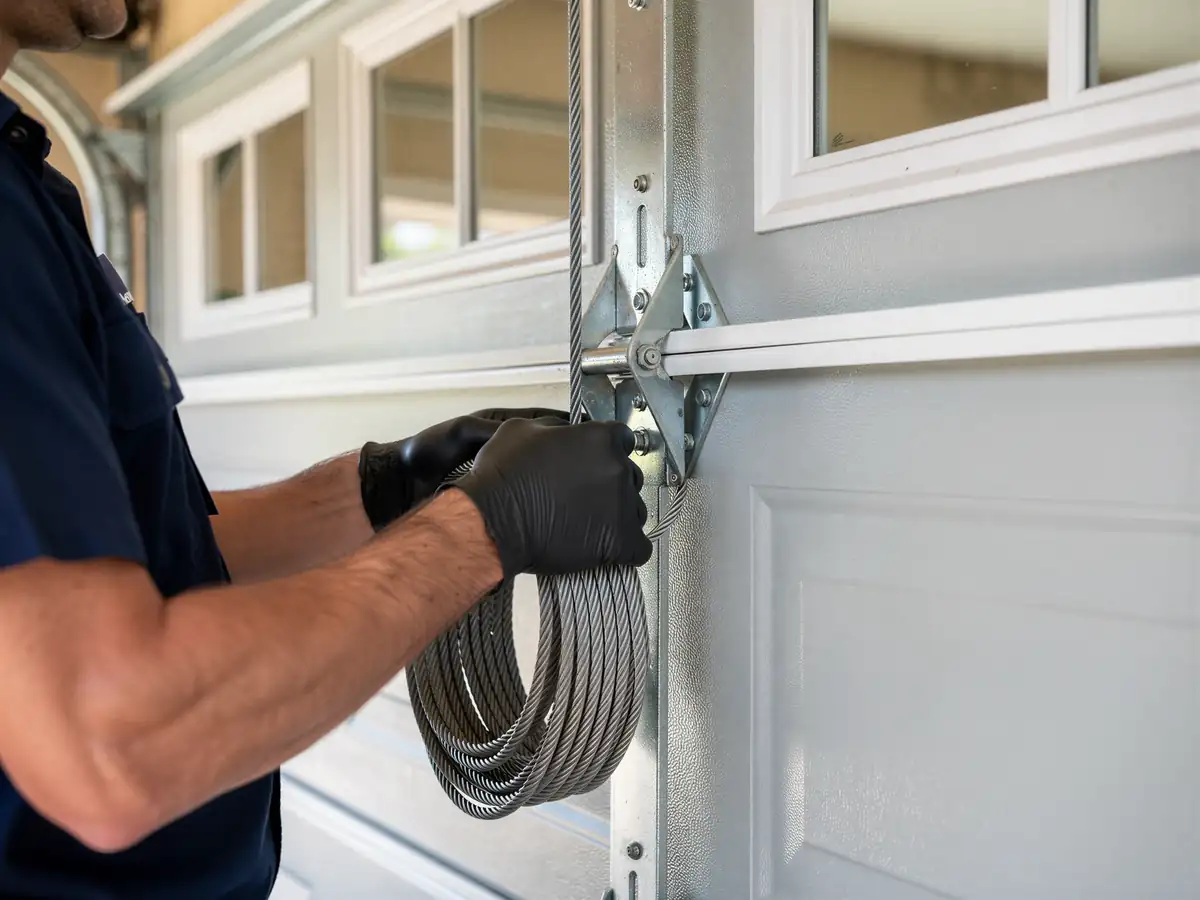
On a door this age, failure rarely comes out of nowhere - it builds. A spring going bad on a 1958-era door often sounds like a grinding or popping noise right at the top of the lift, before the door gets noticeably harder to open by hand. Cables fraying show up as a visible fray near the bottom bracket, sometimes with rust if the garage sits damp. Opener issues tend to show up as the door reversing partway up, or the remote working inconsistently from inside the car but not from the wall button - usually a sign the force settings have drifted as the spring loses tension, not an electrical fault. If a door on a house this old suddenly feels twice as heavy to lift by hand, that's the spring, almost always, and it's worth getting looked at before someone tries to force it the rest of the way up.
How it works

From “it’s stuck” to “it’s fixed”

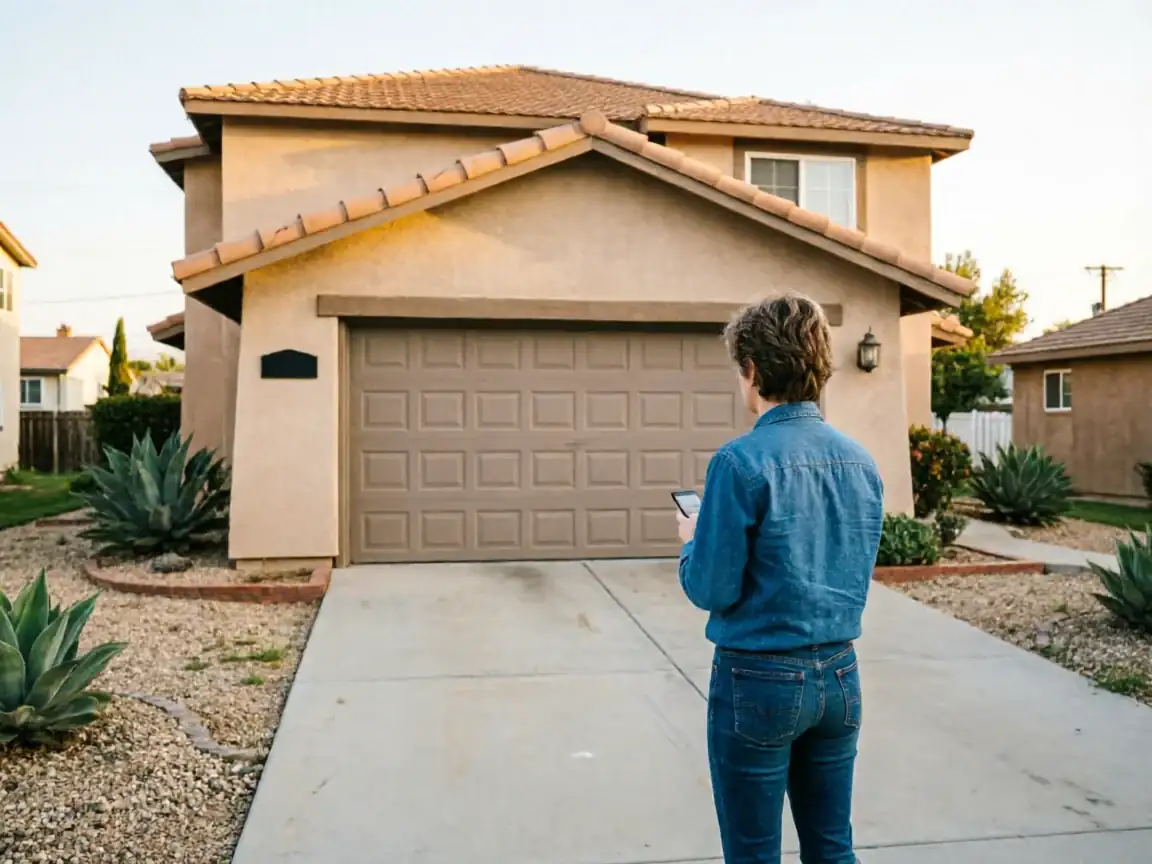
A person in a denim shirt stands in a driveway, looking at a phone.

Tell us what’s wrong

Describe the symptom - won’t open, loud bang, opener runs but the door won’t move.

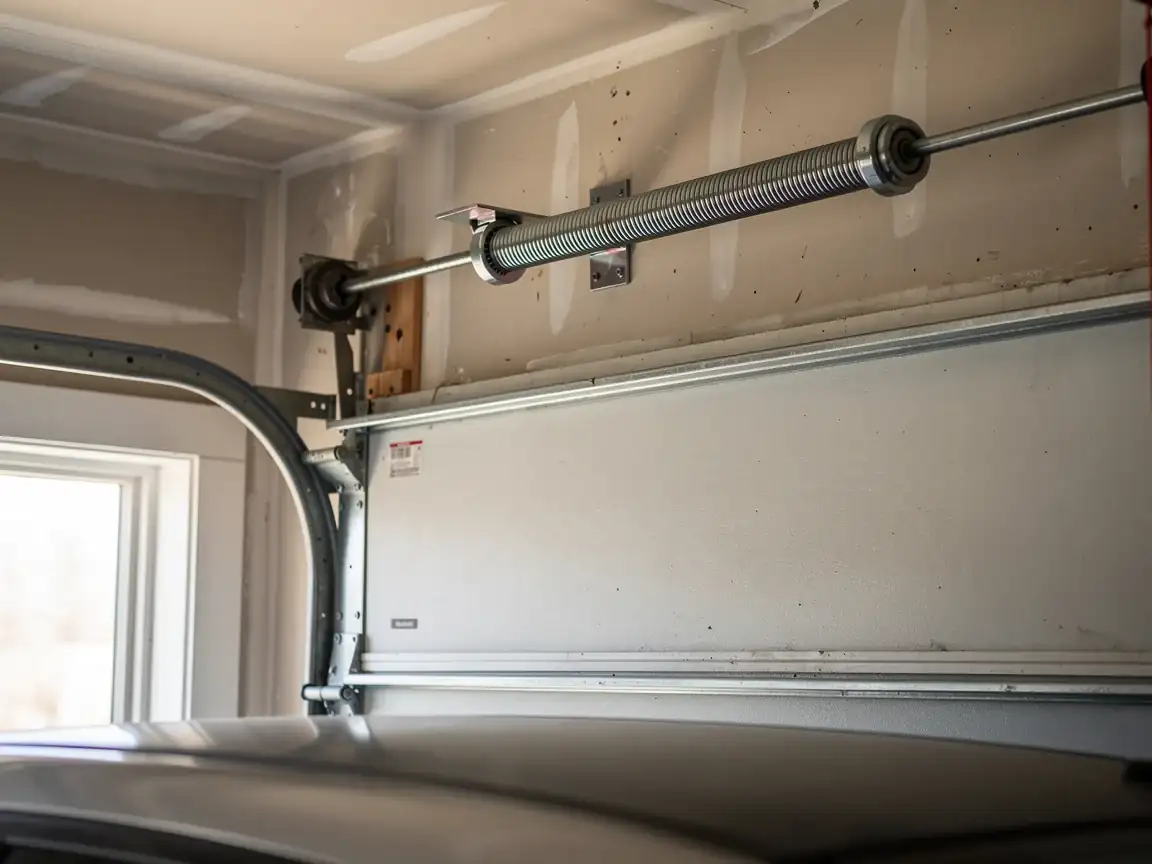
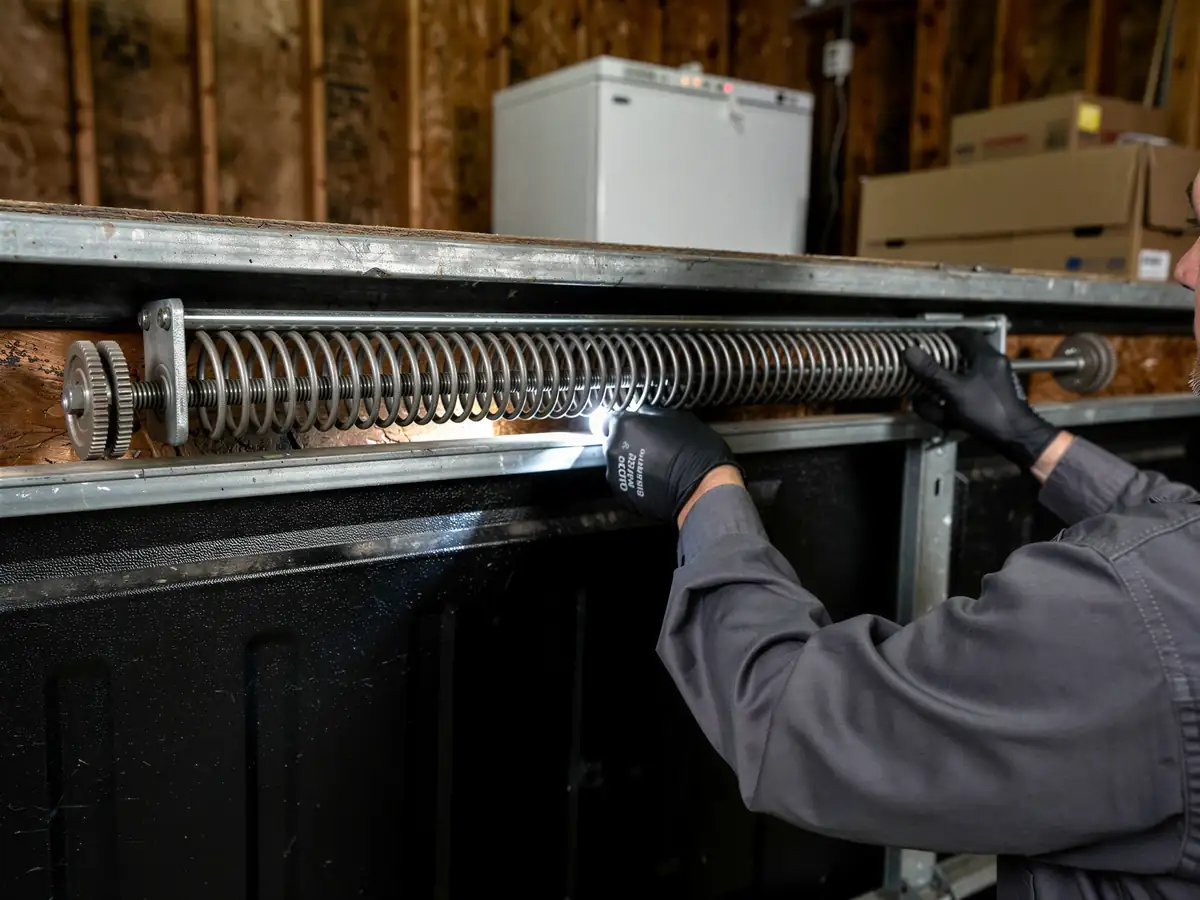
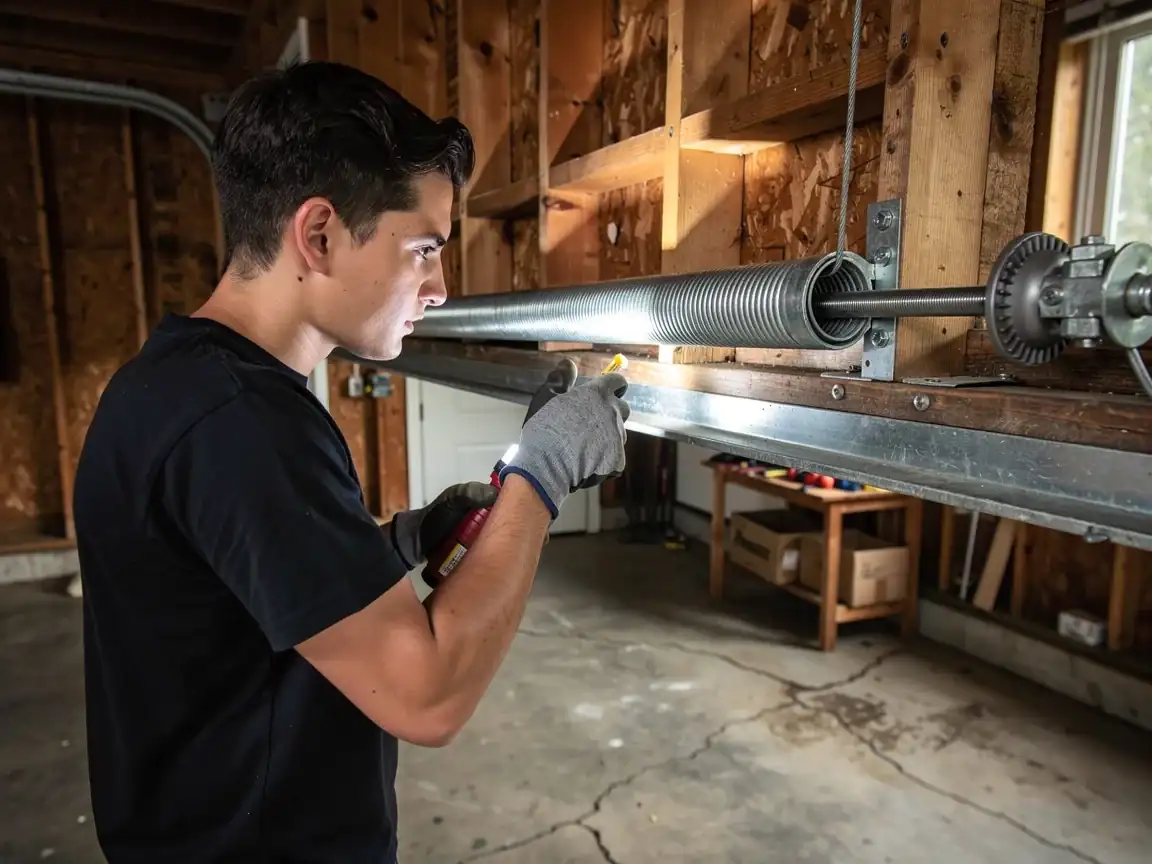
A technician shines a flashlight on a garage door torsion spring.

On-site diagnosis

A technician tests the door under power and by hand and finds what actually failed.

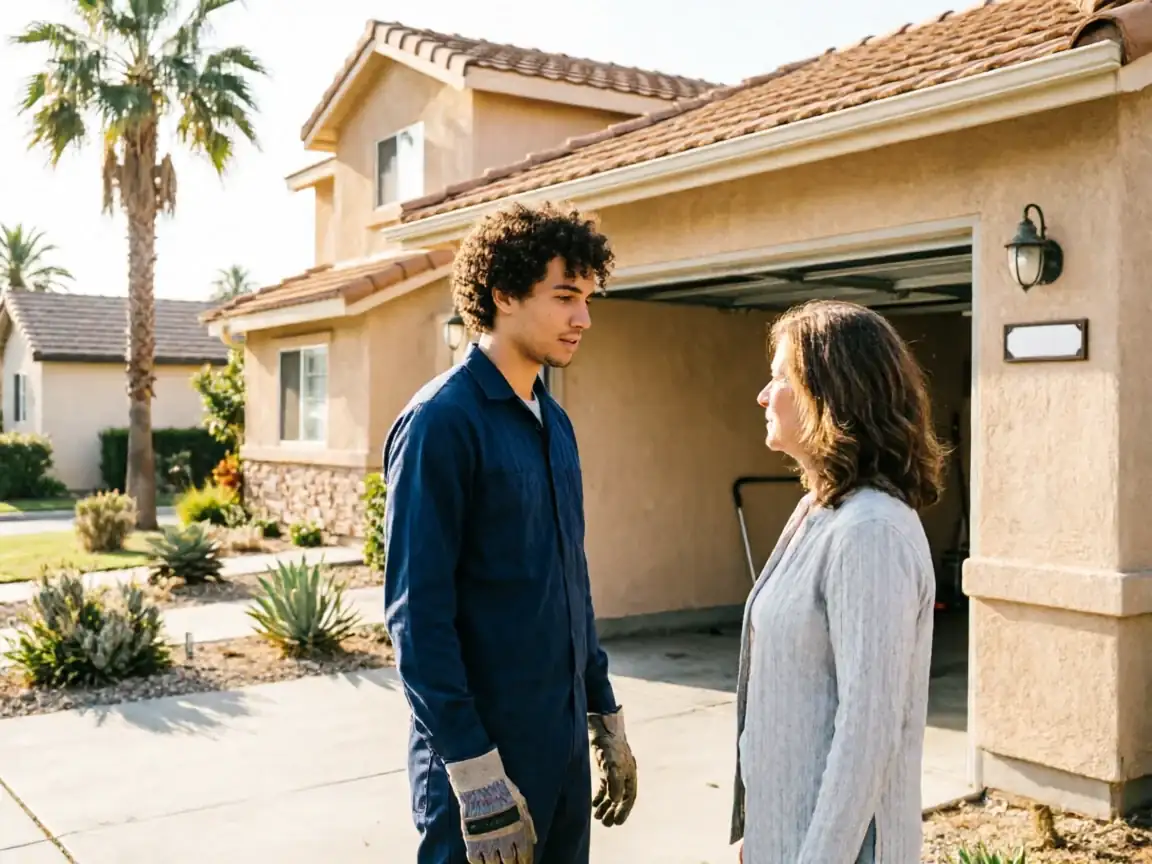
A technician in a blue uniform talks to a woman in front of a house.

Clear, up-front plan

You get the fix that’s needed and what drives the cost - before any work starts.

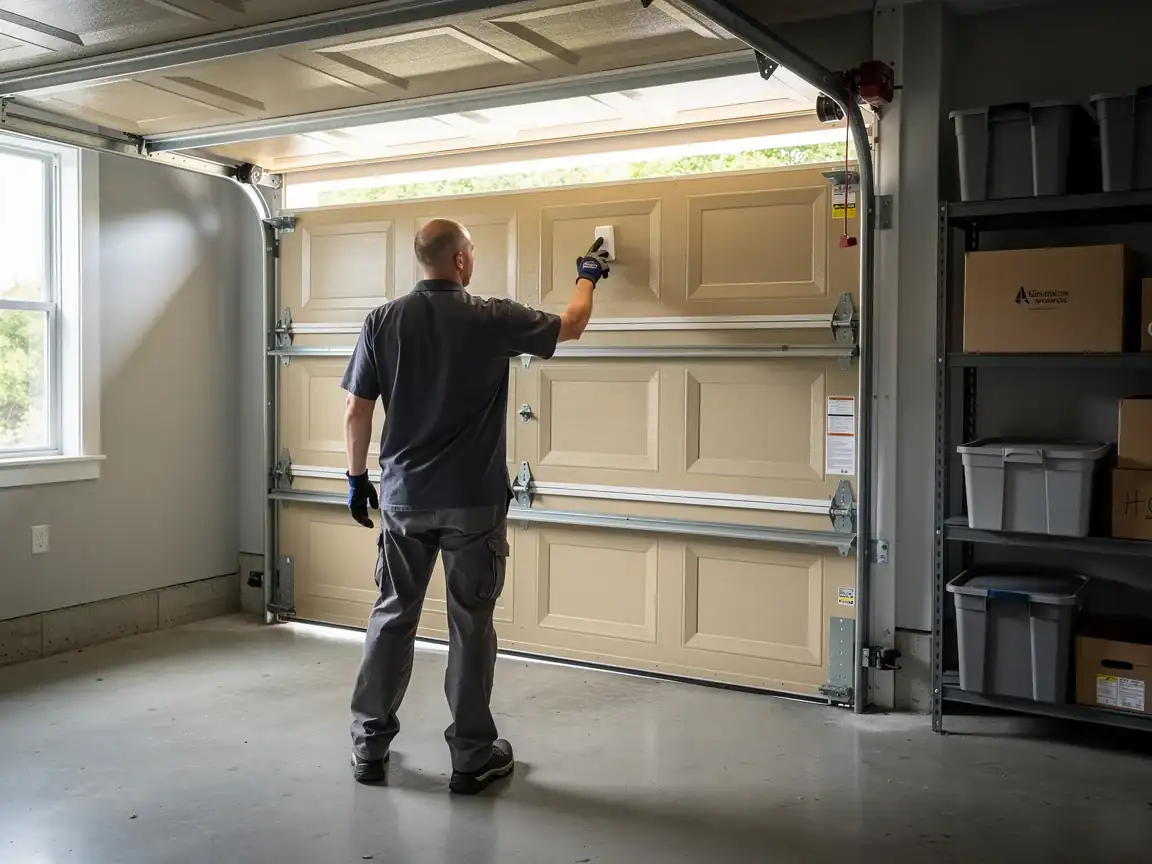
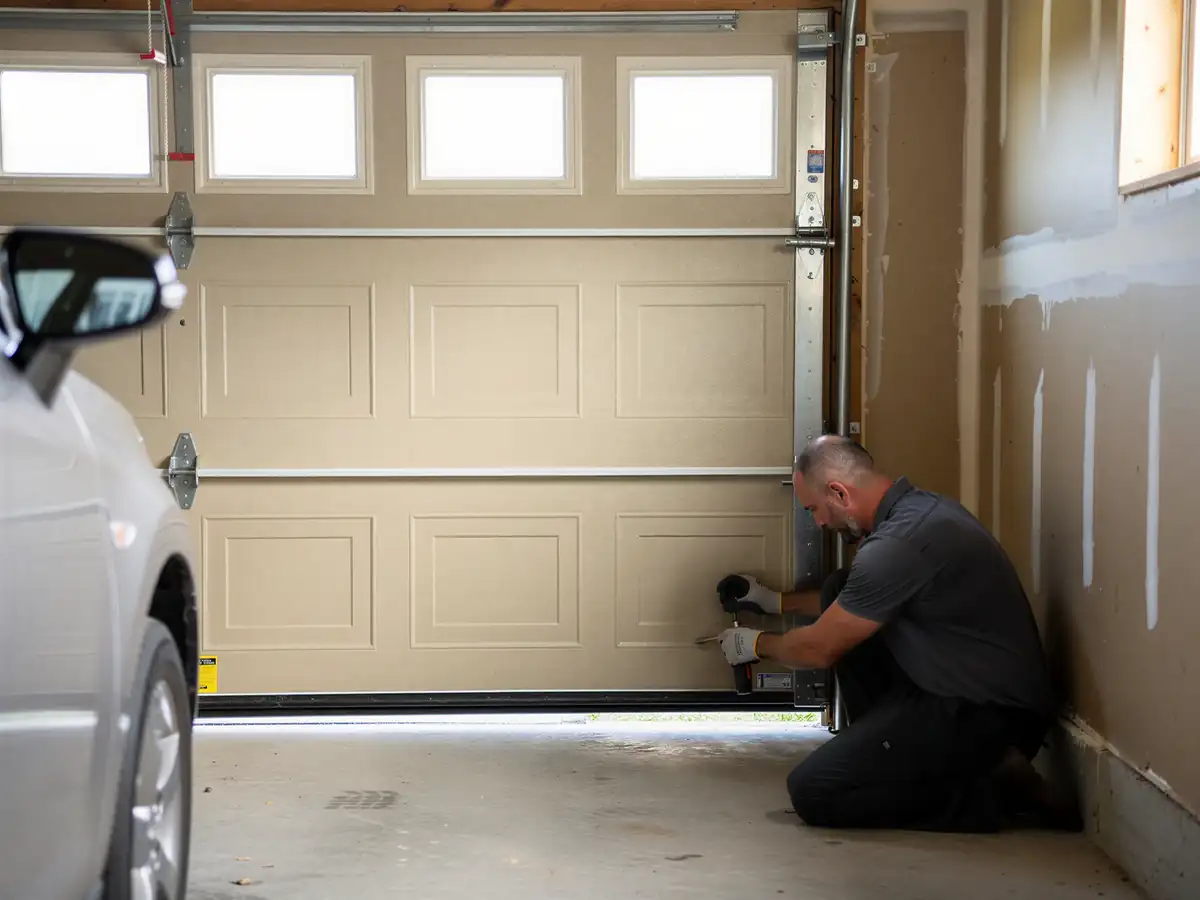
A technician in a gray uniform is pressing a button on a beige garage door.

Repaired & tested

The repair is done, the door is set true and tested, and the work area left clean.

Next step

Not sure which repair your door needs in Inglewood, CA? Describe what it’s doing - every job starts with a diagnosis.

How we work

What to expect

A straight, honest approach on every Inglewood job.

Diagnosis first

Every visit starts by finding what actually failed - not a pre-written parts list.

The right part for the door

Springs and openers matched to the door’s weight and age, so the fix holds up.

Straight answers

When a repair makes more sense than a replacement - or the reverse - you hear it plainly.

Clean, careful work

Tension released safely, hardware set true, the door tested under power before we leave.

111,666Residents in Inglewood
8Garage door services
8Neighborhoods & suburbs
CAServing Inglewood, CA
Questions

Frequently asked

Straight answers about garage door repair in Inglewood. Still unsure? Ask us directly.

Why does my garage door feel heavier than it used to?

On a house built around 1958, that's almost always a torsion spring losing tension over time, not something wrong with the opener. The spring and opener work together - the opener lifts, the spring carries most of the weight. When the spring weakens, the opener strains to compensate, which is also why a lot of these calls start as 'the opener sounds like it's struggling' before anyone notices the spring.

Do you carry parts for older doors on the truck?

We carry common sizes but not every spring and track configuration, especially for doors from the late 1950s where a prior repair may have introduced non-standard hardware. If the door needs something unusual, we'll diagnose on the first visit and schedule the fix once the right part is in hand rather than guess and reinstall twice.

Is it worth replacing the whole door instead of repairing it?

Sometimes, and it depends on what's failing. A spring or cable issue on an otherwise sound door is almost always a repair, not a replacement. If the panel itself is dented, rusted through, or the track is bent from years of a misaligned opener, replacement can cost less over time than repeated patch repairs. We'll tell you straight which side of that line your door is on.

How far out is Westmont from your base?

About 3 miles from Inglewood, which keeps travel time short. We don't run a separate branch or depot in Westmont - every job here is a truck dispatched from Inglewood, same as the rest of the service area.

Ready to get your garage door sorted?

Tell us what it’s doing and where you are in Inglewood - we’ll take it from there.

Request a QuoteCall