How We Fix It
Westmont sits three miles from our shop in Inglewood, which is close enough that a panel job here doesn't turn into a half-day trip before we even open a toolbox. That matters because panel work is measured in minutes of actual labor once the right section is on the truck - the drive shouldn't be the bottleneck, and here it isn't.
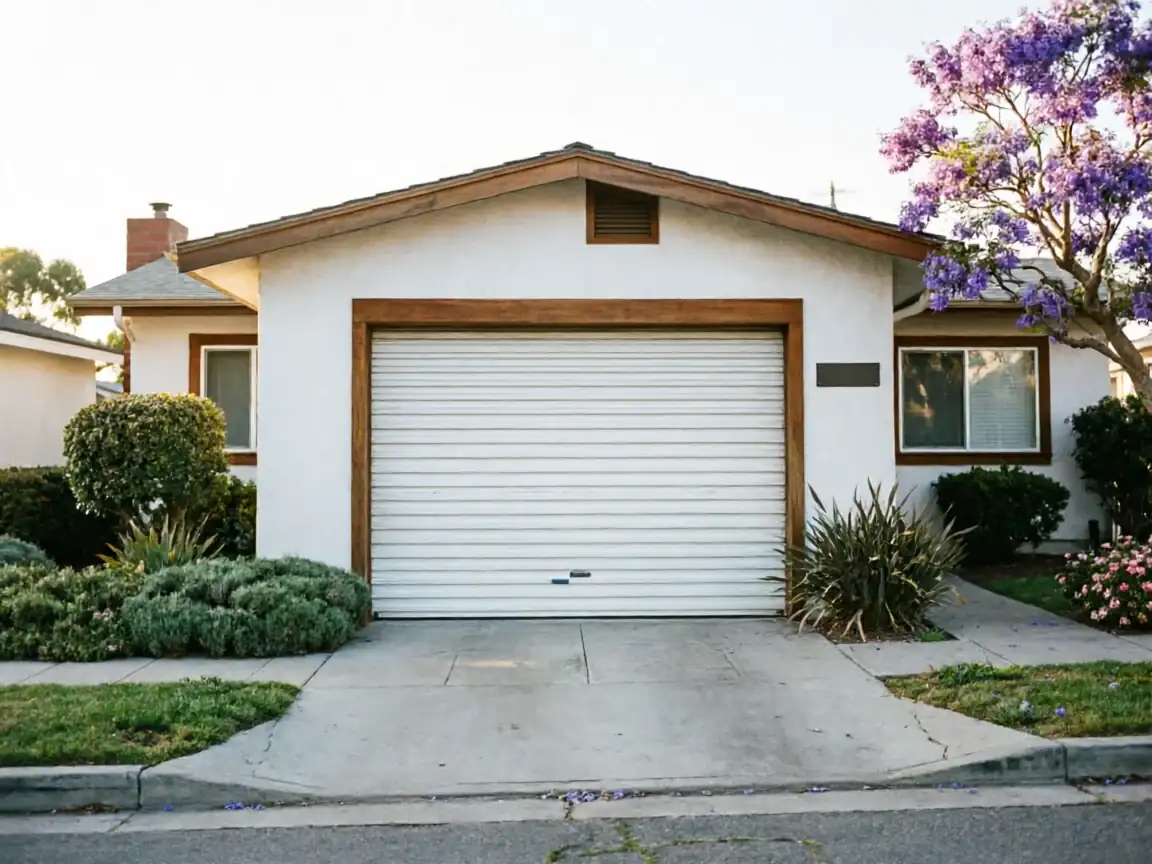
Most houses in Westmont went up around 1958, a notch earlier than the 1961 median across the wider service area. That extra few years matters on steel doors: panel profiles and rib spacing shifted more than once between the late 1950s and the 1970s, so a dented section from a 1958 build won't always bolt up to a panel pulled from a newer stock door. We bring a few profile options and measure the hinge spacing and rib pitch on site before we cut anything loose.
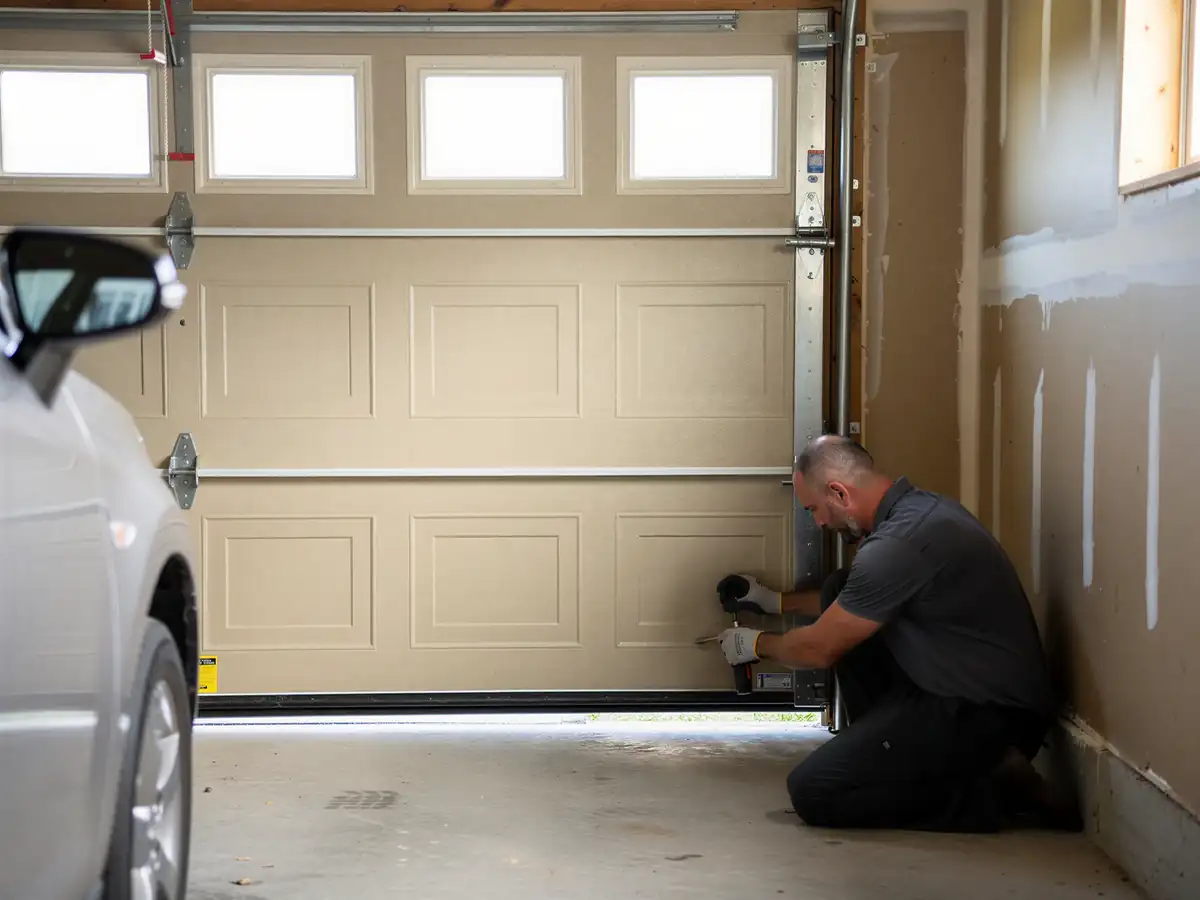
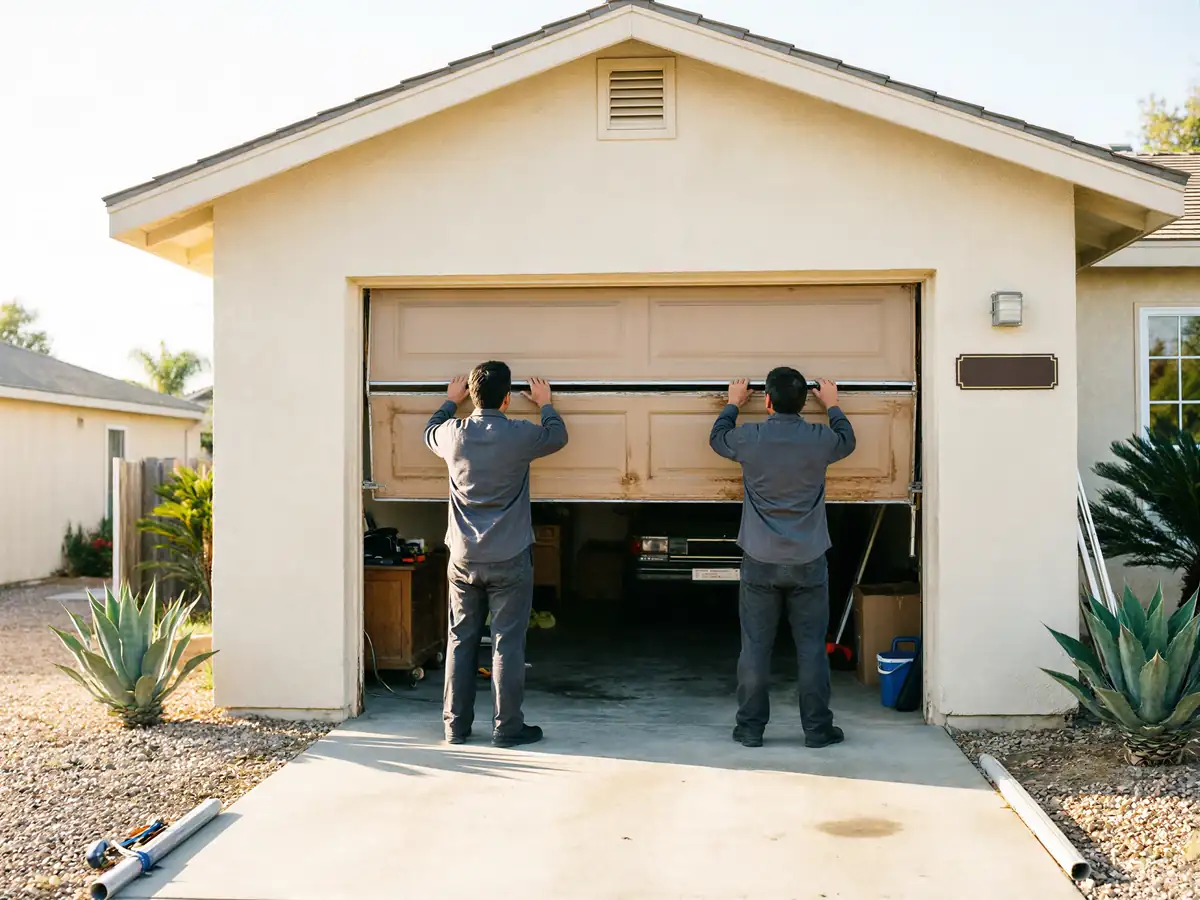
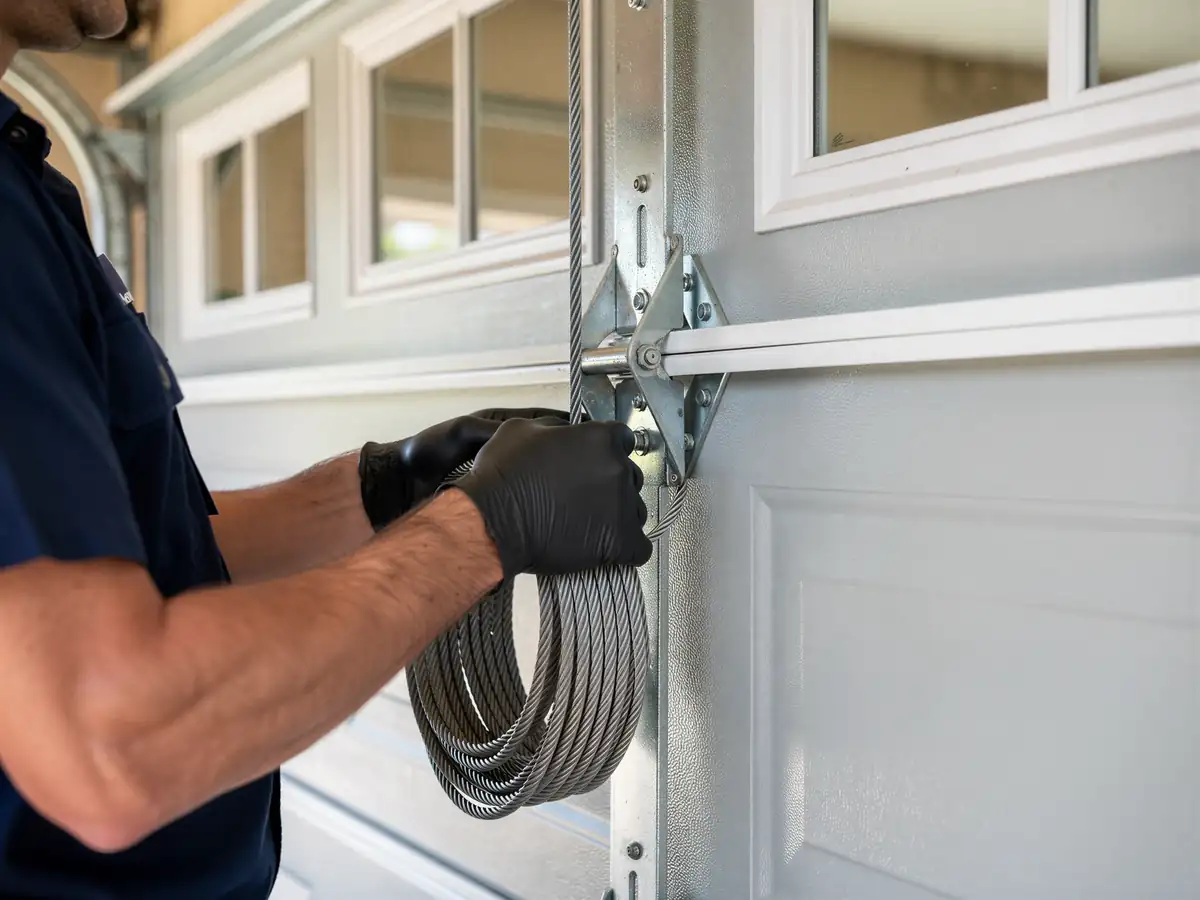
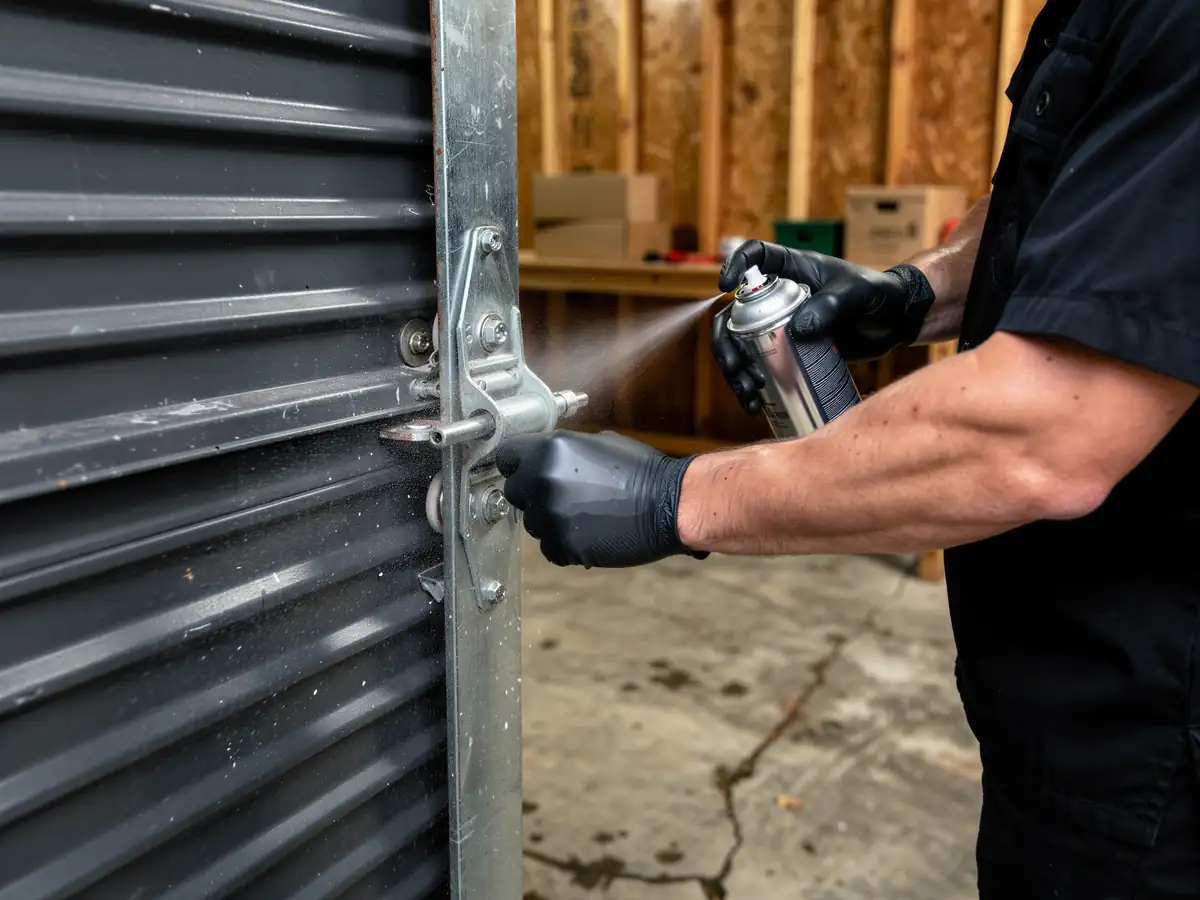
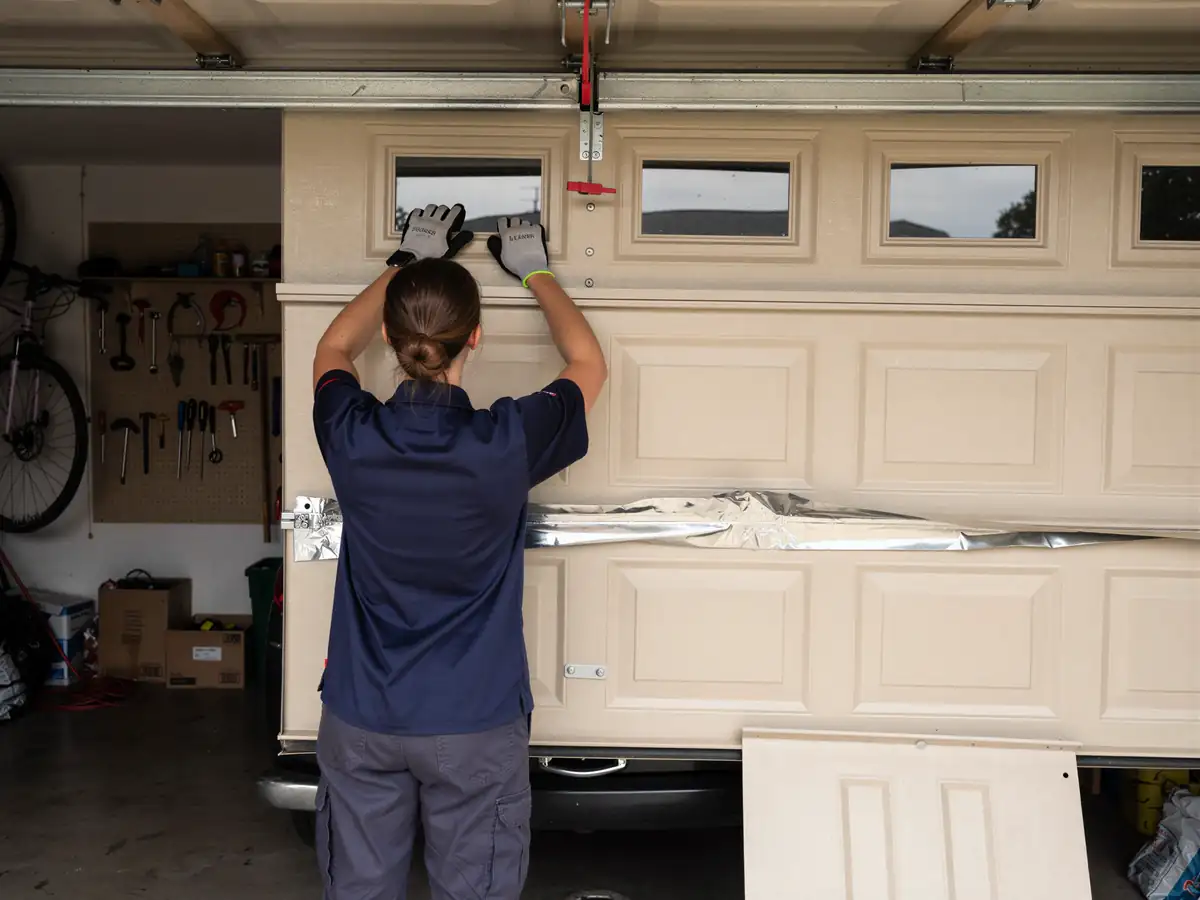
We pull the damaged section, match hinge and roller bracket spacing to what's actually on your track, and set the new panel so it tracks true instead of binding on the first cold morning. If the whole door's that era and one more panel is already mismatched from a prior repair, we'll say so instead of adding a third patch to a two-patch door.
The DIY Question
Swapping a single bottom panel on a torsion-spring door is within reach for someone comfortable with hand tools
And we won't pretend otherwise. The part that trips people up in a neighborhood like Westmont is matching an original 1958-era panel profile to what's sold off the shelf today - get the rib spacing wrong and the new section looks fine until it won't sit flush against its neighbor.
What we don't recommend doing yourself
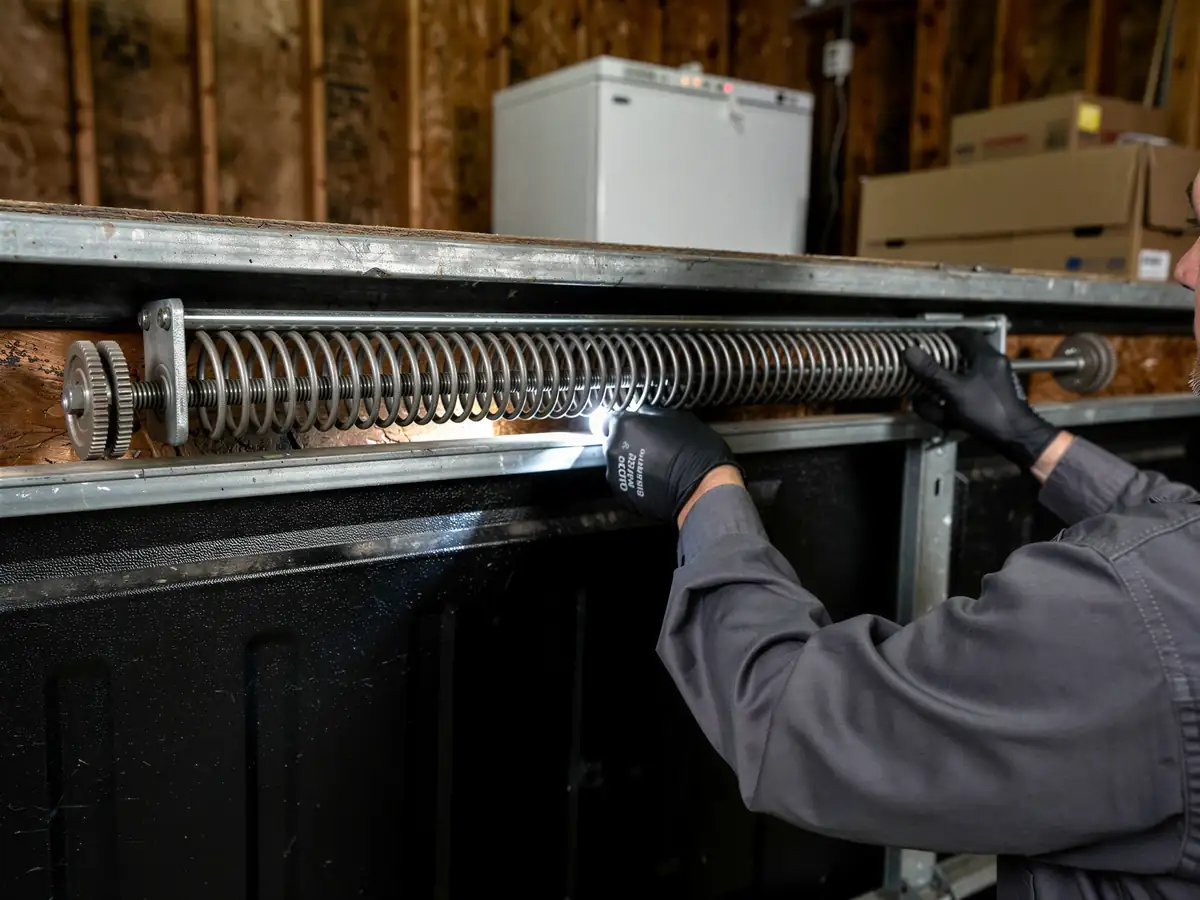
Top panels near the spring assembly, or any section replacement where the door has to come off track to get the new panel in. That's not a panel job anymore, that's a door-off-the-hinges job, and the spring under tension doesn't care how careful you are.
If you've already got the panel in hand and just need confirmation it's the right fit before you commit a Saturday to it
That's a fair question to call in on. We'd rather tell you over the phone that the rib spacing is wrong than have you install it and find out.
Getting It Booked In
We work this job from Inglewood, three miles out, so there's no separate dispatch or local branch to coordinate - one call sets the appointment and the same crew that handles panel work across the service area shows up. Tell us the make of the door if you know it, or send a photo of the damaged panel and the brand sticker on the track if there is one; that saves a trip back for the wrong-profile part.
We don't carry every panel style on the truck at all times, so for less common 1950s profiles we may need a day to source the exact match rather than force a close-enough substitute onto a door that's otherwise original. We'll tell you up front if that's the case instead of showing up with the wrong part and calling it close enough.
Where This Job Goes Sideways
The failure mode we see most on doors from this era is someone replacing one bent panel, then another two years later, until the door is a patchwork of slightly different steel gauges and the whole thing racks sideways under spring tension. At that point a panel swap stops being a repair and starts being a stopgap on a door that's telling you it's done.
Westmont's median household income sits at $47,899, and we factor that into how we talk about this. A single panel is a reasonable repair. A door needing its third mismatched panel, on hardware original to a 1958 build, usually costs more in labor fitting mismatched sections than a full door replacement would - and we'll say that plainly rather than stack another patch onto it for the sake of billing a visit.
How Long It Takes
A straight single-panel swap, once we've confirmed the profile matches
Runs about as long as it takes to unbolt the hinges, lift the old section out, and set the new one - most of the visit is measuring and confirming fit on an older door, not turning wrenches. We don't give a fixed number here because a top panel near the spring takes longer than a bottom panel clear of it, and a mismatched-profile door takes longer still if we're trimming a replacement to fit non-standard rib spacing.
Mild temperate weather here means we're not racing a storm window or working around ice on the track
Which keeps the job predictable - the variable is the door's own history, not the day's conditions.
How It Shows Up
Panel damage in Westmont usually starts the same way it does on any 1958-era steel door: a car bumper, a stray ball, or just age thinning the steel until a dent turns into a crease that won't pop back out. On original hardware from that build year, we also see panels that have worked loose at the hinge over decades of use, which shows up as a section that flexes or rattles before it ever visibly cracks.
If the dent is cosmetic and the door still tracks straight, that's worth knowing too - not every mark needs a new panel. We'll tell you when it's cosmetic and when it's structural, because the two calls for the same-looking dent are different jobs.